Water Heater Installation & Replacement
Swap out a worn tank for a unit sized to the household, with the fuel and location that fit.
No hot water, lukewarm showers, a rumble from the tank or a puddle on the garage floor. Most of these have a specific cause, and some can be fixed without replacing the heater.
If the tank is leaking, shut off the cold supply and power or gas first.
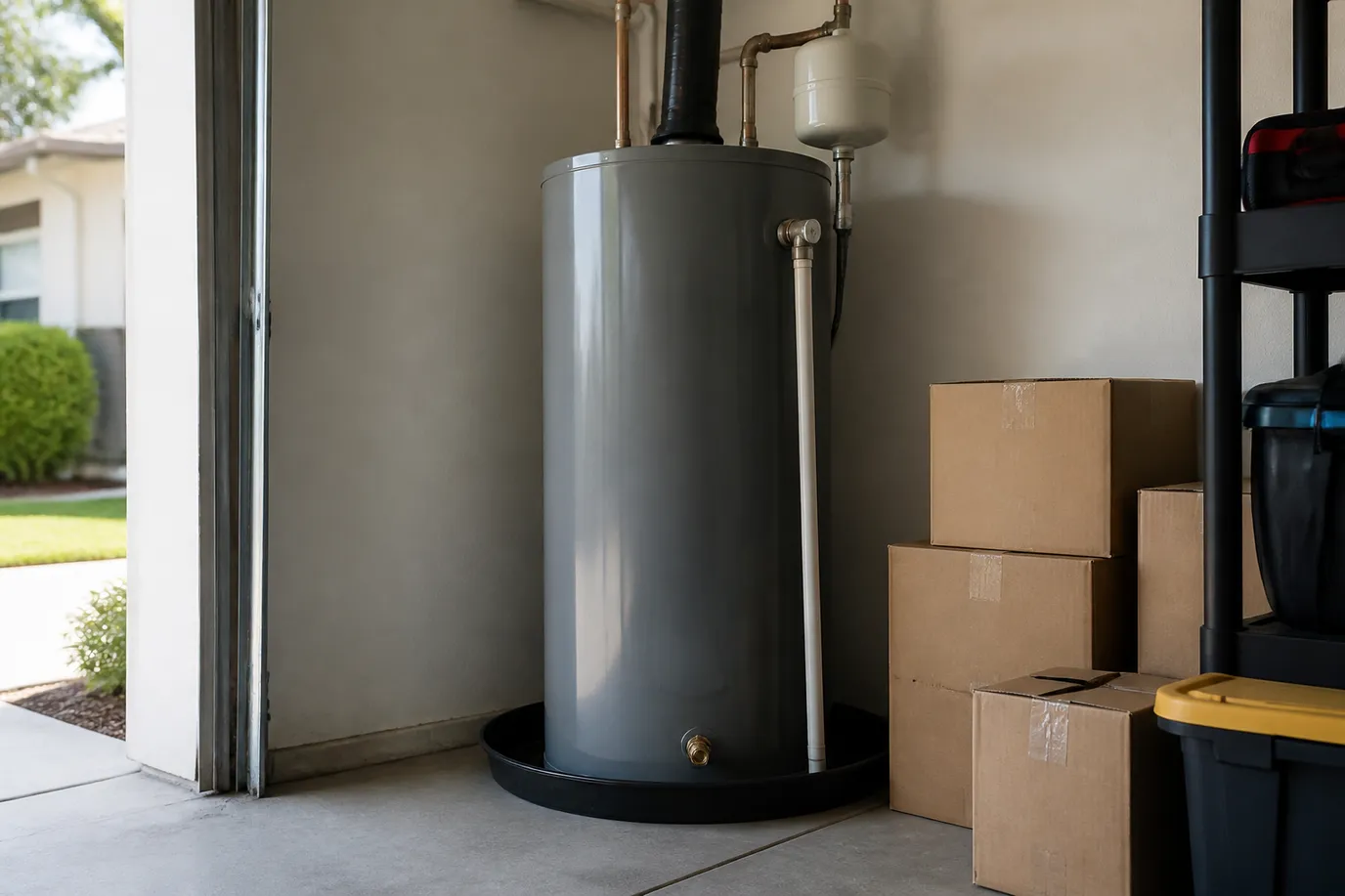
For an electric heater, check the breaker and the reset button on the upper thermostat. For gas, confirm the gas valve is open and the pilot or igniter is working. Look for a tripped safety device before assuming the worst.
Check the temperature setting. A dial knocked to a low setting is a common cause of lukewarm water.
A drip at the top is often a loose fitting or a failing supply connector. A leak from the relief valve can mean high pressure or a worn valve. Water that seeps from the bottom of the tank usually means the tank has failed.
A tank leak cannot be repaired. Shut off the cold supply, turn off power or gas, and call. If the heater is in an attic, protect the ceiling below.
Many Mesa heaters sit in hot garages or attics, where summer temperatures shorten the life of parts. The City of Mesa lists hardness near 12 to 16 grains per gallon, which speeds scale.
Check the drain pan and relief pipe each season. A wet pan means trouble is already underway.
Repair pricing depends on the part, the fuel type and the location.
Ask for both a repair price and a replacement price on a heater over ten years old.
Hard water leaves mineral deposits that collect at the bottom of a tank. They insulate the water from the burner or element, which makes the tank work harder and run hotter. The popping or rumbling you hear is steam bubbles escaping the scale.
Flushing the tank can reduce this if done early. A tank that is badly scaled may not respond and may be better replaced.
A heater under ten years old with a bad element or thermostat is a good repair candidate. An older tank with a leak or heavy scale is usually not.
Ask the plumber for the age on the data plate and the cost of repair against replacement. A clear comparison helps.
Heaters usually warn you before they fail.
A part such as a thermostat, element, valve or igniter can be replaced on a sound tank. A tank that leaks through the shell cannot be patched. Age matters too, since many tanks last around ten years, and less in hard water.
Expect questions about the age, fuel type and size. The plumber checks the leak source, the venting on gas units and the pressure. Ask for a price on both paths so the comparison is clear. The replacement page covers a full swap.
Electric units fail at elements and thermostats. Gas units add burners, igniters and venting. Hybrid heat pump units need clearance and airflow. Tell the dispatcher which type you have so the crew brings the right parts.
Same-day service depends on the schedule and on parts. If you smell gas, go outside and call the gas utility before anything else.
These steps limit damage and speed the visit.
Swap out a worn tank for a unit sized to the household, with the fuel and location that fit.
Flush scale from a wall-hung unit, clear error codes and repair or replace it when hard water wins.
Put in a softener to tame Mesa's mineral-heavy water, or revive one that stopped regenerating.
A tripped breaker, a failed element or thermostat, or a pilot that went out are the usual causes. A plumber can test each.
It depends on where. A fitting or relief valve leak can be fixed. A tank leak means replacement.
Often around ten years, less in hard water or a hot garage. Ask for the date on the label.
Follow the label. If you smell gas, leave and call 911 or the City of Mesa gas line at 480-644-4277.
Yes. Call at any hour, and close the cold supply above the tank if it is leaking. Gas units that smell of gas need the building cleared first. Timing follows the contractor's schedule.
If the tank is sound, a part may extend its life. A tank around ten years old with a leak is usually better replaced.
It depends on the part, the fuel type and access. The dispatcher can explain how the visit is charged before dispatch.
Same-day service depends on the schedule and parts. Say whether the unit is gas or electric.
A failed tank, a drain valve or a loose connection are possible. Close the supply and power, then call.
Ask when you call so the dispatcher can confirm what the crew can handle.
Close the supply and call. Tell the dispatcher what fuel it uses and where it sits.
Service area centered on Mesa and nearby Maricopa County cities.