Burst Pipe Repair
Shut off the flood, then cut out the split section and restore flow with a lasting joint.
Wet materials start to break down within hours, and mold can show up in a day or two. Restoration is a separate job from the plumber's repair. It means stopping the source, pulling out the water, drying the building and rebuilding what was damaged.
This page shows the separate phone number used for water damage.
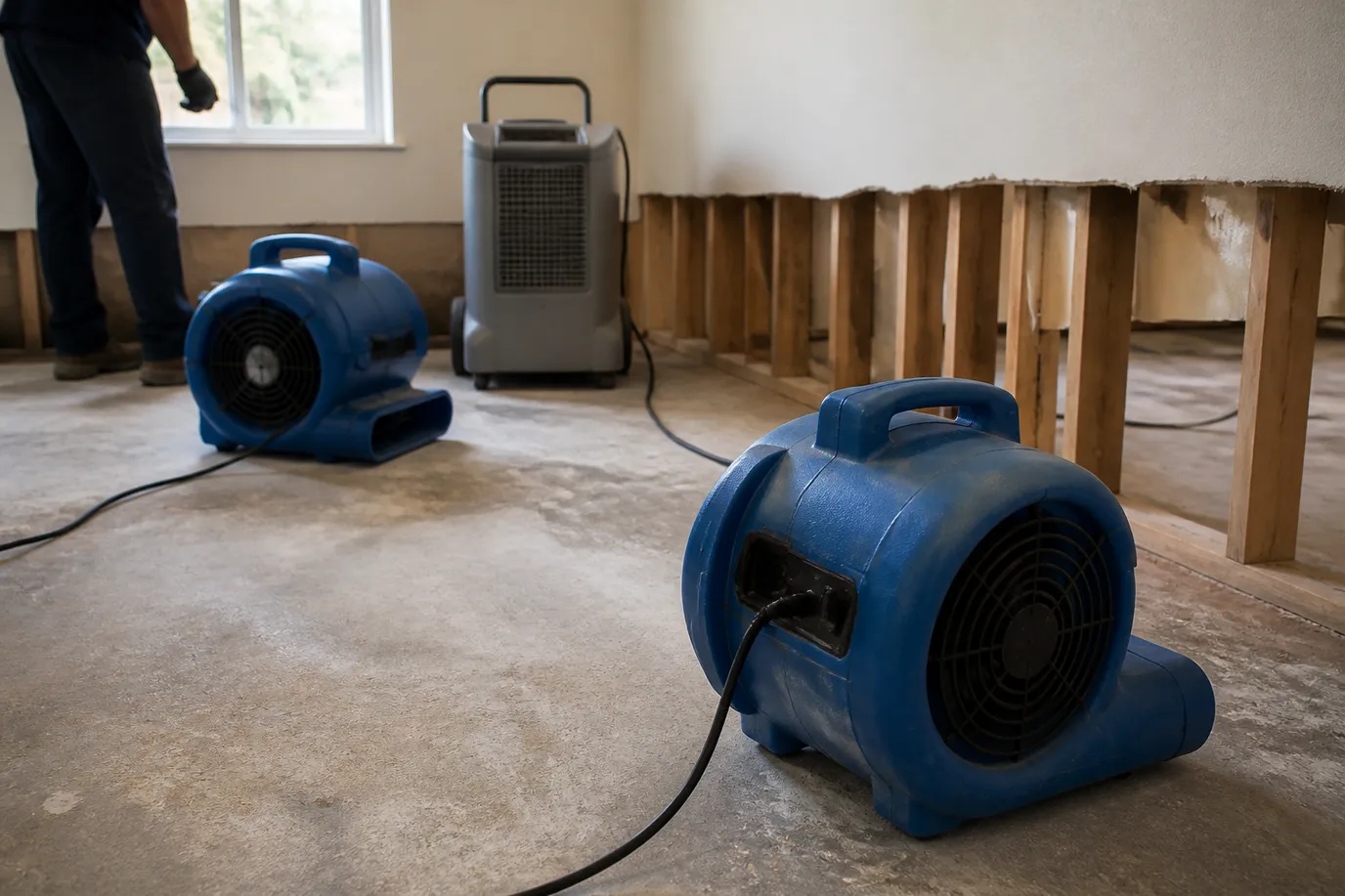
Cut off the source when you can. With a leaking pipe, close the main water valve. With storm or flood water, stay out of it while power is on, and flip breakers only from a dry spot.
Photograph and film the scene before moving anything. Raise small items off wet floors and set soaked rugs aside, but leave heavy cleanup to the crew.
The IICRC S500 standard used in restoration grades water by contamination. A broken supply line releases clean water. Washer overflow produces gray water with some contamination. Black water, including sewage and flood water, is dangerous.
Black water, which includes sewage and flood water, is hazardous. Porous materials that soak it up usually have to be removed, so leave sewage cleanup to professionals.
Restoration pricing follows the area affected and the work required. Four factors matter most.
Request the equipment list, the drying plan and the expected number of days before work begins.
The National Weather Service dates Arizona's monsoon from June 15 to September 30. A hard downpour can push water past roofs, door seals and low garage thresholds.
Many Mesa houses are slab-on-grade, so spilled water spreads across flooring and wicks into walls. Phone early, because wet baseboards and cabinet kicks conceal moisture.
Once standing water is out, crews place air movers and dehumidifiers to pull moisture from the structure. Moisture meters are read on each visit, and drying carries on until walls and floors reach a normal range.
Ask what readings count as dry and how often they will be checked. Stopping early leaves moisture hidden in the framing.
Mold can start within a day or two in damp drywall or carpet pad. If you see it, ask whether the plan includes containment and removal, and whether testing makes sense.
Once everything is dry, rebuilding covers drywall, insulation, paint, flooring and trim. Ask who handles each stage.
Damage is not always a puddle. These clues mean moisture is inside finishes.
The crew starts by finding the water category and the extent of the wet area with moisture meters. Extraction comes next, then air movers and dehumidifiers set up to pull moisture out of the structure. Some materials are removed when they cannot dry in place.
Many callers want the damage assessed before they replace anything. Ask for the moisture readings and a plan that says what stays, what goes and what the rebuild involves. That record also helps with an insurance claim.
These steps limit the spread while you wait.
Photograph the damage before cleanup and keep the wet materials until the adjuster has seen them, unless they are unsafe. Write down the time you found the water and the steps you took to stop it.
Keep the restoration company's moisture logs and invoices. They show what was wet, how long drying took and what equipment ran, which supports a claim.
Hard goods such as glass, metal and sealed plastic usually clean up. Upholstery, mattresses and paper are harder, and anything touched by sewage is generally discarded. Ask the crew whether they inventory and pack out contents or leave that to you.
Shut off the flood, then cut out the split section and restore flow with a lasting joint.
Locate hidden water loss behind walls, under floors or along the buried pipe, then decide how small an opening can be.
Track down the cause of cold showers, drips, rumbling tanks and pilot or element faults.
Mold can begin growing on wet materials within a day or two, so quick drying matters.
Sometimes, when it was clean water and drying began quickly. Otherwise it gets cut out and replaced.
A sudden event is often covered, but a slow leak usually is not. Read the policy and contact your insurer early.
Yes. Drying cannot work while water keeps arriving.
Yes. This page has a dedicated phone line staffed all night. Stop the water at its source first when that is safe.
Same-day availability depends on the schedule. Say how much water there is and where it is when you call the restoration line.
Cost depends on the water category, the area affected and how long equipment runs. Ask for the scope and the drying plan before work starts.
Yes. Moisture readings show what is still wet, which prevents sealing in a problem.
Ask the dispatcher. This page covers water inside the home and its structure.
Yes. Drying cannot work while water keeps arriving, so the plumbing repair comes first.
Use the restoration line. Say where the water came from and which areas are wet.
Service area centered on Mesa and nearby Maricopa County cities.