Water Heater Repair
Track down the cause of cold showers, drips, rumbling tanks and pilot or element faults.
Tankless heaters heat water on demand, but hard water and neglect shut them down. A yearly flush and the right repair keep them producing hot water.
Error codes are clues. Write down the code before you call.
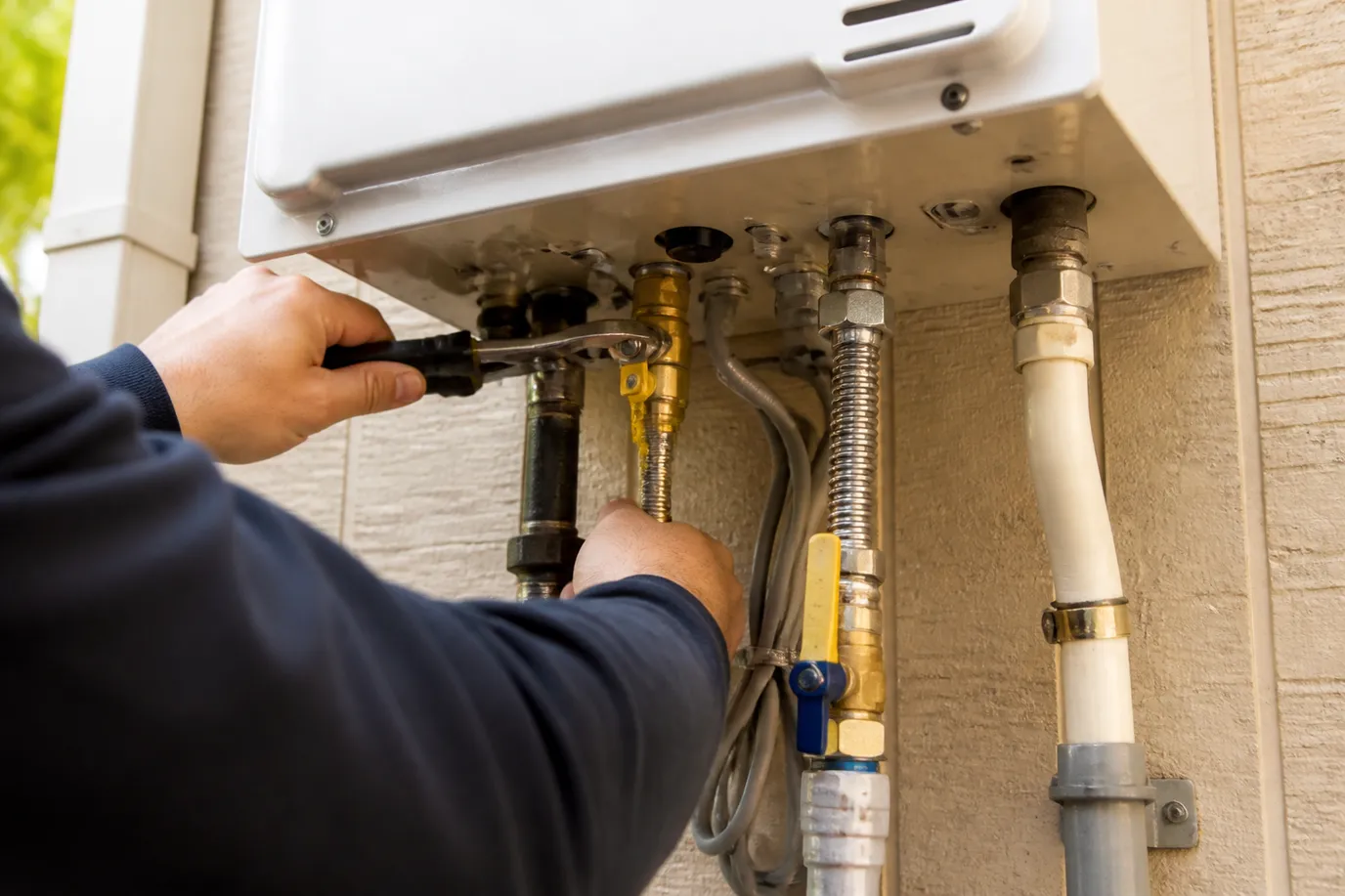
Hard water leaves mineral deposits inside the heat exchanger. The unit works harder to heat the water, then overheats and shuts off. Output drops long before the unit fails.
The City of Mesa lists hardness near 12 to 16 grains per gallon. In those conditions scale builds steadily.
The plumber isolates the unit, connects a pump and hoses to the service valves and circulates descaling solution through the heat exchanger. Then the unit is rinsed and the inlet filter is cleaned.
Ask how often the maker recommends a flush for your water. Yearly is common in hard water.
Without service, tankless units in hard water areas can fail early. Set a reminder to flush once a year.
A softener upstream of the unit reduces scale. Ask about it if you schedule frequent service.
Service pricing depends on the work and the model.
Ask whether service valves are installed. Without them a flush takes longer.
Common repairs include replacing an igniter, flame sensor, flow sensor or a failed circuit board. Venting problems and gas supply issues also cause faults.
Ask for the error code history and the part prices.
A tankless heater can last many years when maintained. A unit with a failed heat exchanger or repeated board failures may not be worth fixing.
Get the age and compare repair cost to a new unit.
Hard water is the usual culprit.
Flushing runs a descaling liquid through the heat exchanger using a small pump. It removes mineral deposits and restores flow. In hard water, many makers call for yearly service.
Not every company works on every brand. Give the dispatcher the brand and model so they can confirm before a crew is sent. If the unit cannot be repaired, the replacement page explains your options.
Cost depends on the unit, its condition and whether it has isolation valves. If valves are missing, the plumber may recommend adding them so future flushes are simple. Same-day service depends on the schedule. A softener reduces scale at the source.
Track down the cause of cold showers, drips, rumbling tanks and pilot or element faults.
Put in a softener to tame Mesa's mineral-heavy water, or revive one that stopped regenerating.
Swap out a worn tank for a unit sized to the household, with the fuel and location that fit.
Often once a year in hard water. Follow the maker's guidance.
It points to a fault area such as ignition, flow or venting. The plumber reads it and tests the part.
Yes. It reduces output and can cause overheating.
They make flushing much easier. A plumber can add them.
Call whenever it happens. Shut off a unit that leaks or smells of gas before anything else. Timing depends on the contractor's schedule.
Many makers suggest yearly, more often in hard water. Check your manual.
Scale, a clogged filter or a flow problem are common. A plumber can read the code.
Ask when you call and give the model name.
Often yes. It can restore flow and delay replacement.
Write down the error code, then call. The dispatcher can set up a visit.
Service area centered on Mesa and nearby Maricopa County cities.