Water Heater Repair
Track down the cause of cold showers, drips, rumbling tanks and pilot or element faults.
When a tank fails, you need a replacement that fits your household, your fuel and your space. A good installation also meets code and lasts.
Ask for the full scope: the unit, venting, permit and haul-away.
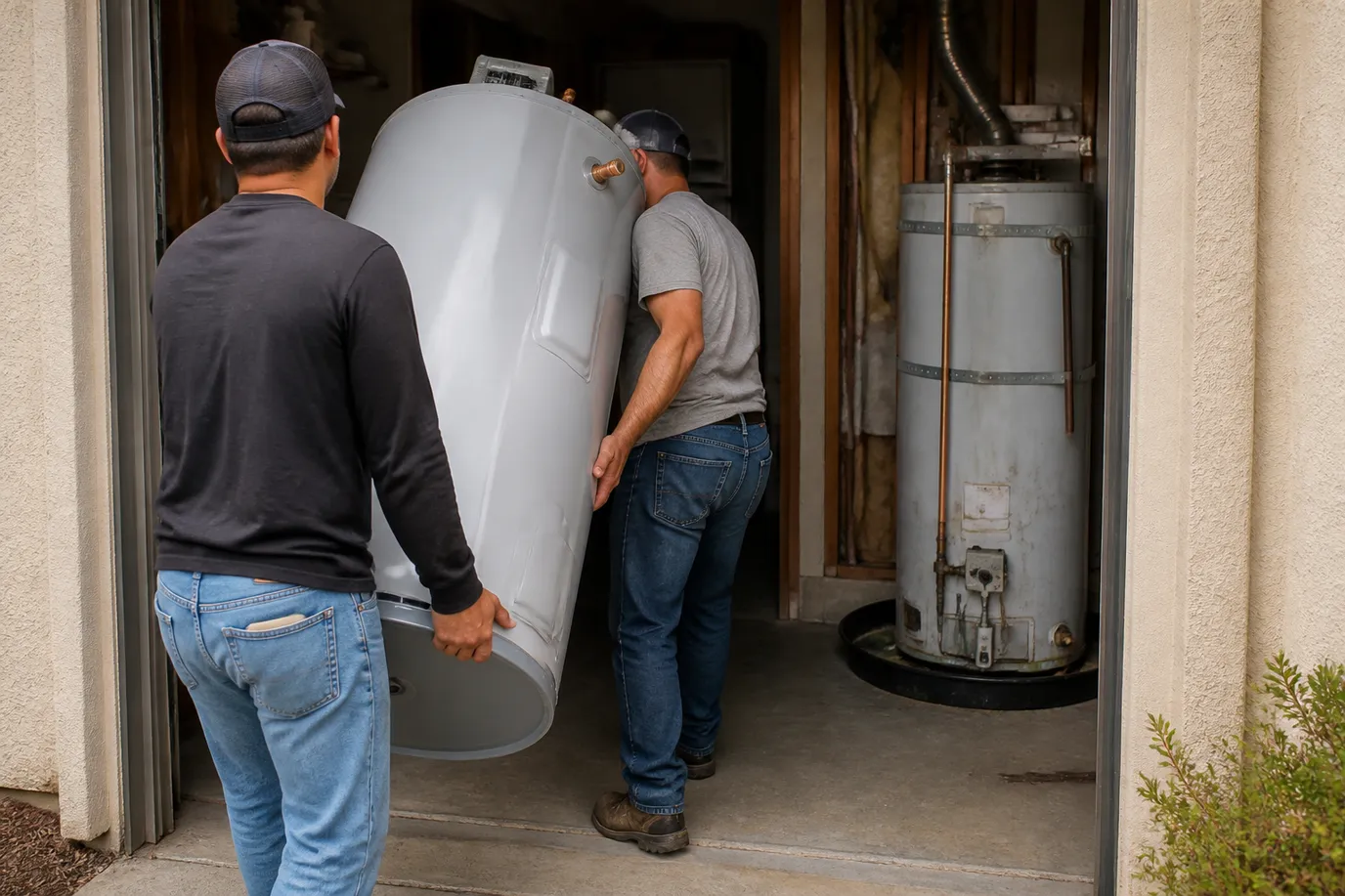
Tank size follows household size and hot water habits. A small family may do well with a medium tank, while a large family or a house with a soaking tub may need more.
First-hour rating matters more than gallons alone. Ask the plumber what it is for the unit being quoted.
Gas heaters recover fast and cost less to run where gas is available. Electric tanks need no venting but cost more to run. Heat pump models use less power but need space and airflow.
The City of Mesa runs a natural gas utility for many homes. If you are on gas, a gas unit is usually the straightforward swap.
Replacement cost depends on the unit and the work around it.
Compare quotes by listing the unit model, warranty and what is included.
With water hardness near 12 to 16 grains per gallon, scale will shorten any heater's life unless it is managed. A softener or regular flushing helps.
Garage and attic heaters face high temperatures. Choose a unit and install location suited to the heat.
A proper install includes a new relief valve and discharge pipe, shutoff valves, flexible connectors and an expansion tank where needed. Gas units need correct venting and a sediment trap.
Ask whether a permit is pulled and who pulls it. A permitted install protects you at resale.
In garages, the heater should be raised or protected as required. In attics, a drain pan with a drain line limits damage when the tank leaks.
Moving a heater costs more than a swap in place. Ask about a leak sensor or shutoff valve for added protection.
A good install includes the small parts that make a heater last.
Size depends on household use and peak demand, not just the size of the old tank. Fuel depends on what is already supplied to the location. Switching fuel adds work such as a new circuit or gas line.
Many homes keep the heater in a garage or attic. Ask about a drain pan, a drain line and clearance. An attic install over living space deserves extra leak protection. A leak sensor or shutoff valve is a modest add-on.
Cost depends on the size, the fuel, the location and any code upgrades. Ask for the price in writing with each item listed. Same-day replacement depends on stock and the schedule. For a tankless option, read the tankless page.
Track down the cause of cold showers, drips, rumbling tanks and pilot or element faults.
Flush scale from a wall-hung unit, clear error codes and repair or replace it when hard water wins.
Extend or mend gas piping for ranges, dryers, barbecues and patio fire features.
Often a few hours for a like-for-like tank swap. Larger changes take longer.
It depends on the budget, the gas line and your hot water habits. Ask for a comparison.
Water heater installs commonly need one. Ask the contractor to confirm.
It depends on household size and usage. The plumber can match first-hour rating to your needs.
Yes. A failed tank can often be swapped in a single visit, though timing depends on the contractor's schedule and available stock.
Often several hours for a like-for-like swap. Fuel changes and code upgrades take longer.
Yes in many homes, but gas size, venting and electrical needs must be checked.
Usually yes. Ask the company whether they pull it.
A tank near ten years old is a candidate. Planned replacement avoids a flooded floor.
Call and describe the old unit. The dispatcher can set up a visit.
Service area centered on Mesa and nearby Maricopa County cities.