Water Filtration Installation
Install a whole-house or under-sink filter to improve taste, chlorine odor and sediment.
Mesa water is hard. Scale shows up on faucets, glass and inside heaters. A softener removes the minerals before they build up.
Ask whether the unit is salt-based or salt-free and what that means for upkeep.
The City of Mesa's 2025 report lists hardness near 12 grains per gallon in its City Zone and near 16 in the Eastern and Southern Zones. Anything above about 10 is generally treated as very hard.
Your address determines which zone applies. Test the water at home for a precise number.
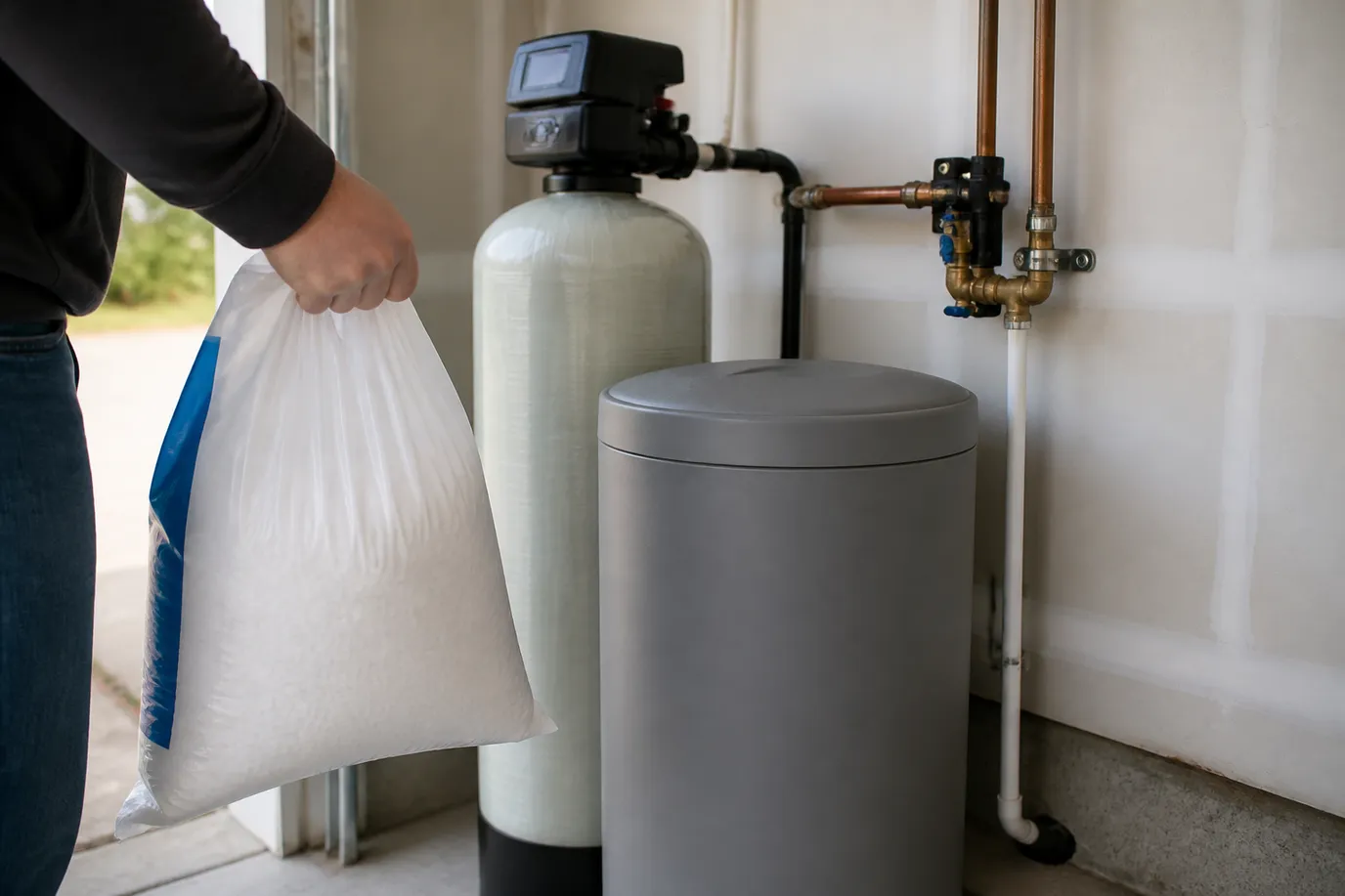
A salt-based softener swaps calcium and magnesium for sodium in a resin tank. The resin recharges with a salt brine on a schedule. Salt-free systems condition the water so scale does not stick, but they do not remove hardness.
Which fits depends on your goals. Ask for both options and a frank comparison.
Softener cost depends on the size and the installation.
Ask what the monthly salt use and service cost will be.
A softener protects heaters, dishwashers and fixtures from scale. It does not replace regular heater maintenance.
Check HOA and local rules before installing a salt-based unit. Rules on brine discharge vary.
A softener installs near the main supply line, with a drain connection for the brine discharge and an electrical outlet. A bypass valve lets you turn it off for service.
Ask where the drain will run and who handles any HOA approval.
Common repairs include resin replacement, valve and control head repairs and fixing a brine tank that will not draw. Salt bridges, a crust in the salt tank, are a frequent cause of failure.
Refill salt on schedule and clean the tank once a year.
A softener that stops working lets scale back in.
A control valve, a seal kit or a brine line can often be repaired. A tank or resin bed worn out after many years may be worth replacing. Ask what age and brand the unit is before deciding.
A new softener needs a drain, power and a bypass. Ask where the drain line will run and where the brine discharges. Test your water before and after so you can see the difference. See also the filtration page.
Cost depends on the equipment, the plumbing changes and any repairs needed. Same-day service depends on the schedule and parts. Ask the dispatcher whether the crew can work on your brand.
Install a whole-house or under-sink filter to improve taste, chlorine odor and sediment.
Flush scale from a wall-hung unit, clear error codes and repair or replace it when hard water wins.
Track down the cause of cold showers, drips, rumbling tanks and pilot or element faults.
Yes. The city reports about 12 to 16 grains per gallon depending on the zone.
A properly set unit adds very little sodium. Taste is rarely affected.
Salt-based units discharge brine during recharge. Salt-free units do not.
Many last a decade or more with care. Resin may need replacement sooner.
Yes. For a leaking softener, move it to bypass or close its supply valve, and then phone.
A stuck valve or a wrong setting can waste salt. A service visit can check the settings.
Often yes if the tank is sound. Ask for a repair price and a replacement price.
Many households use it. If sodium is a concern, ask a doctor or add a drinking water filter.
Yes. Describe your water and space when you call.
Call and tell the dispatcher what you see. They will set up a visit.
Service area centered on Mesa and nearby Maricopa County cities.