Slab Leak Detection & Repair
Pinpoint a failing line under the concrete floor of a Mesa home and compare spot repair, reroute and repipe.
When leaks keep returning in different rooms, patching stops making sense. Repiping replaces the old supply lines so the house has a fresh start.
Ask for a written scope that names the pipe, the openings and the patching.
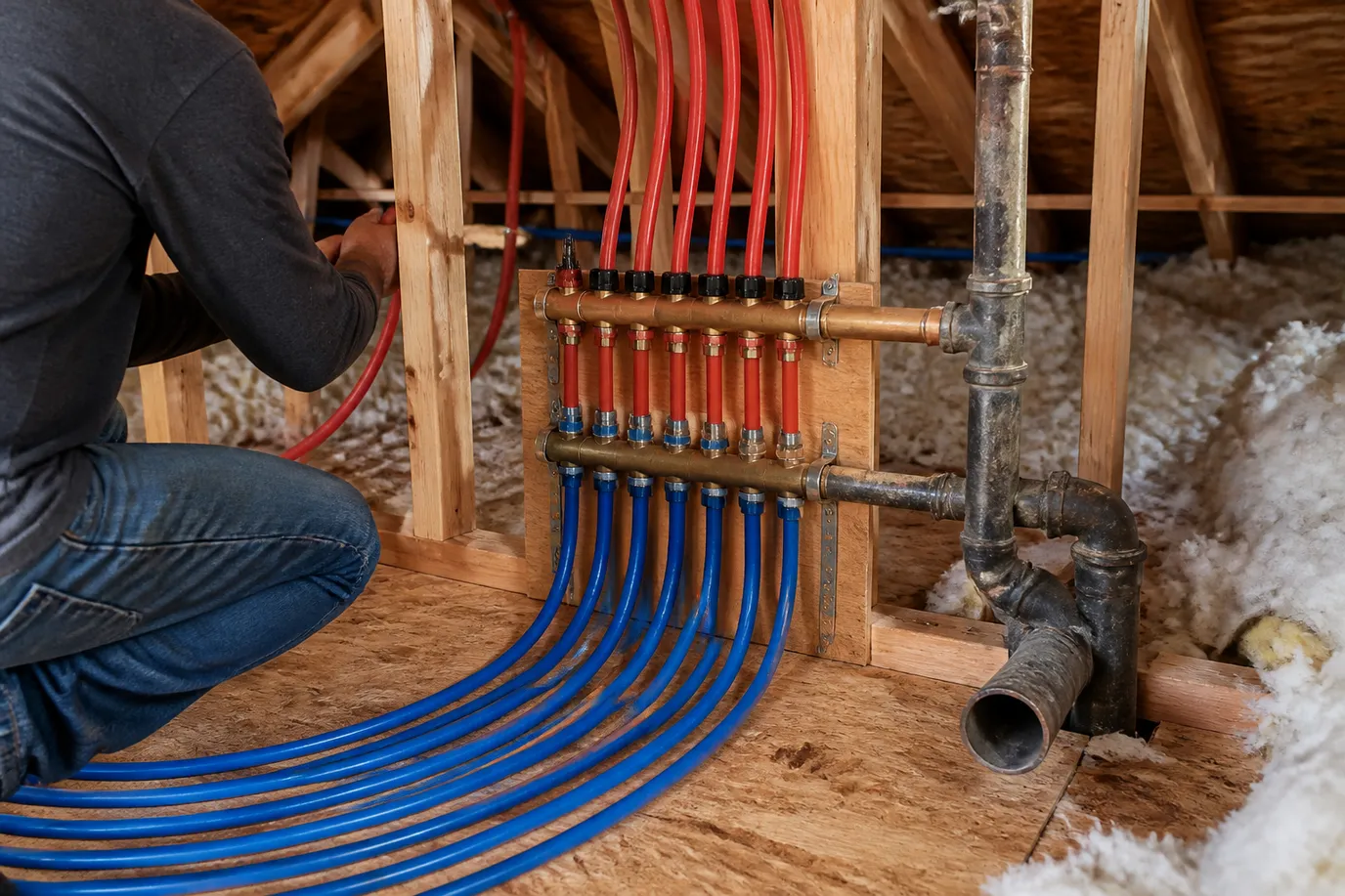
Repiping replaces the supply lines that feed every fixture. The drains, which carry water out, are a separate system and are not part of most repipes.
The new pipe is usually PEX or copper. PEX is flexible and resists corrosion. Copper is rigid, long-lived and fire resistant. Each has fans and a fair price difference.
One leak in a pipe that is otherwise sound is a repair. Three leaks in two years is a pattern. Rusty water, weak flow and visible corrosion at the fittings all suggest the line is nearing the end.
Homes built from the late 1970s to the mid 1990s should be checked for polybutylene pipe, a gray or blue plastic known for failing at the fittings.
A repipe quote reflects the size of the house and how hard the pipes are to reach.
Compare quotes by the scope listed, not only the total. Check what each one includes.
The City of Mesa lists hardness near 12 grains per gallon in the City Zone and near 16 in the east and south. Mineral-heavy water can pit copper and coat fixtures.
Repiping is a good time to add a pressure regulator and new shutoff valves. Ask about a softener if scale is part of the problem.
Crews shut off water, cut small access openings and route new lines through attics, closets and walls. Many repipes are done with a few small holes, not a full demolition.
Ask where the openings will be, how long the house will be without water and who repairs the drywall. A clear plan for each avoids frustration.
Repiping usually involves a permit and an inspection. Ask whether the contractor handles both and who pays for them.
Get the warranty in writing, including the length of coverage and what voids it. Keep the pipe type and fitting brand on file for later repairs.
Pipes do not fail all at once. They give hints.
A crew runs new lines through walls and attic spaces, connects fixtures and removes or abandons the old pipe. Water is off for part of the day. Ask how many days to expect and how drywall patching is handled.
PEX, copper and CPVC are common choices. Each has trade-offs in cost, durability and local code. Ask which is recommended for your home and why.
Cost depends on the size of the home, the access and the material. Ask for a written scope and a fixed price. For a single leak, repair may be enough. See slab leak repair for those cases.
Pinpoint a failing line under the concrete floor of a Mesa home and compare spot repair, reroute and repipe.
Fix or renew the supply pipe running from the street meter to your house, including trenchless options.
Put in a softener to tame Mesa's mineral-heavy water, or revive one that stopped regenerating.
Many homes take a few days, depending on size and access. Ask for the schedule and when the water will be off.
Both work. PEX resists mineral buildup and is quicker to install. Copper lasts long and handles heat well. Your plumber can explain the tradeoffs for your house.
Usually, with planned water-off periods. Ask about temporary water and bathroom access.
Not always. One leak in otherwise sound pipe is often just a repair. Ask the plumber to check the rest of the run.
Yes. The phone is answered at all hours. Close the house valve first, then call. Whole-home repiping is planned work, but a leak that is spreading gets handled first.
Often a few days for an average home. Ask for a timeline.
Ask who handles patching and painting.
If leaks keep returning, it may cost less over time than repeated repairs.
It depends on the home and the budget. Ask for the reasons behind the choice.
Call and describe the history. The dispatcher can set up a visit to look at your pipe.
Service area centered on Mesa and nearby Maricopa County cities.