Leak Detection
Locate hidden water loss behind walls, under floors or along the buried pipe, then decide how small an opening can be.
The service line carries water from the city meter to the house. A leak or corrosion there lowers pressure, soaks the soil and raises the bill. Water welling up in the yard, or pressure down to a trickle, is urgent. Ring the all-hours line.
A soggy patch between the meter and the house deserves a call.
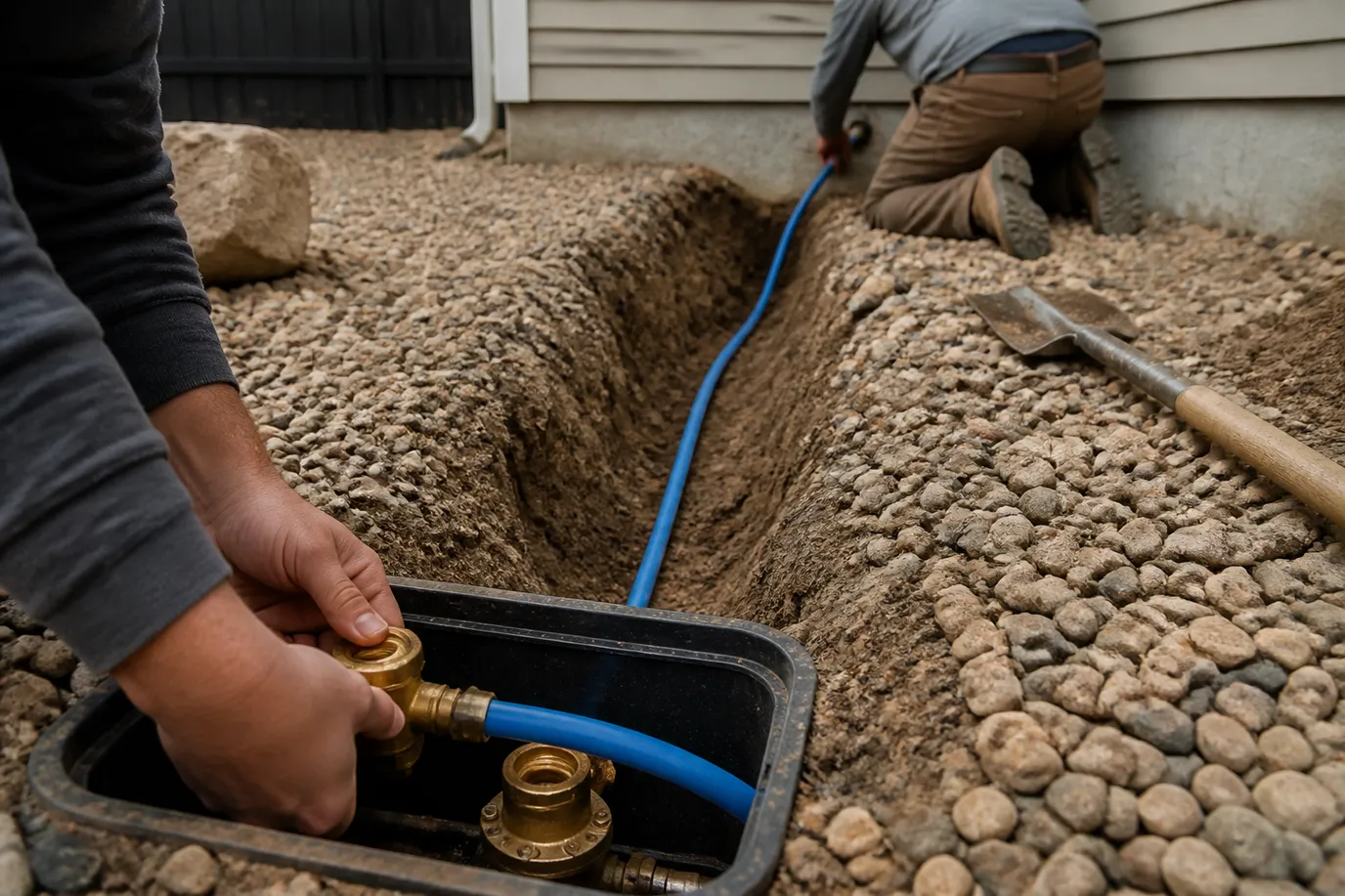
The service line runs from the water meter, usually near the street or front property line, to the main shutoff at the house. The city maintains the meter and its own main. The owner maintains the pipe on the house side.
If you are not sure where your responsibility starts, ask the City of Mesa before paying for a dig. A wrong guess can cost a day.
Old galvanized steel rusts shut from the inside. Copper can pit. Early plastic fittings crack. Roots, shifting soil and pressure surges all add stress, and a line that took years to fail often fails at a joint.
Lead pipe is a separate concern. The City of Mesa says it is removing lead service lines and posts a lead service line inventory online, and homes with older lines can look their address up.
Many Mesa front yards use gravel and desert landscaping, which makes it harder to spot a line leak than in a grass lawn. Look for a strip where the stones stay dark.
Contractors call 811, the utility locate service, before digging. Ask who will make that call.
The length and depth of the line, plus what sits above it, set most of the price.
Ask who repairs the surface after the trench is closed, and whether the quote includes it.
A short leak at one fitting can often be repaired by exposing the pipe and replacing a section. A line with several leaks, or one made of steel that is rusting out, usually calls for replacement.
Trenchless methods, which pull or burst a new pipe through the old path, can limit the digging in some yards. They do not fit every site, so ask what the contractor sees on yours.
Find the meter box and check whether the leak indicator moves. Close the house-side valve and check the dial again. If it stops, the leak is inside the home. If it keeps turning, the leak lies between the meter and that valve.
Photograph any wet ground and mark it with a flag. Keep children and pets clear of soft earth near the line.
The line between the meter and the house is easy to forget until it fails.
A short break can sometimes be repaired with a spot fix. A line with many leaks or old material is better replaced. Trenchless methods pull or burst new pipe along the old route using small access pits, though not every layout allows it.
If the pipe runs under a driveway or patio, ask how the crew will handle restoration. Ask also whether a locate request is made before digging. Calling 811 is standard practice for buried utilities.
Typically the utility owns the meter and the pipe leading to it, while the homeowner owns the line from the meter to the house. Confirm where the line divides with the City of Mesa before ordering work, because a fault on the utility side is not a private expense.
A plumber can show the leak and help you decide who to call. For finding the break first, the leak detection page explains the search.
Prices depend on length, depth, pipe type and surface restoration, so ask for a written scope. Same-day work depends on the schedule and on locate timing. If low pressure is the main complaint, a plumber should check the regulator and valves as well as the line.
Locate hidden water loss behind walls, under floors or along the buried pipe, then decide how small an opening can be.
Shut off the flood, then cut out the split section and restore flow with a lasting joint.
Swap aging galvanized, pitted copper or brittle early plastic lines for new pipe throughout the home.
The city maintains its main and the meter. The stretch from meter to house generally belongs to the owner. Confirm where your line starts with the City of Mesa.
That depends on how long and deep the line is and how easy it is to reach. Many replacements are done in a day or two. Ask for an estimate on your site.
The City of Mesa posts a lead service line inventory online. If your house is older, look up your address and ask a plumber to check the pipe near the meter.
A leak on the city side of the meter is the city's. A leak right after it is yours. Report either one early, since water loss adds to the bill.
Phone the all-hours number. A split service line can flood the yard or leave the house dry, so tell the dispatcher where water surfaces and how much pressure remains. A nearby contractor is matched, and arrival follows that contractor's schedule.
Usually the homeowner, but confirm the dividing point with the City of Mesa before ordering work.
Sometimes. Trenchless methods use small access holes, but they depend on pipe condition and layout.
It depends on length, depth and surfaces. Ask the plumber for a time estimate and whether water will be off during the work.
A break in the service line is one cause. A failing regulator or a closed valve are others, so a plumber should test each.
Buried utilities should be located before digging. Your plumber normally handles the request.
Close the main if you can, then phone and say where the ground is wet.
Service area centered on Mesa and nearby Maricopa County cities.