Leak Detection
Locate hidden water loss behind walls, under floors or along the buried pipe, then decide how small an opening can be.
When a supply line fails inside or beneath the concrete floor, the water has nowhere obvious to go. Accurate detection decides whether you need one small opening or a torn-up room. A slab leak that floods the floor or spins the meter deserves a call whatever the hour.
A leak under concrete never repairs itself. Phone early and ask what your options are.
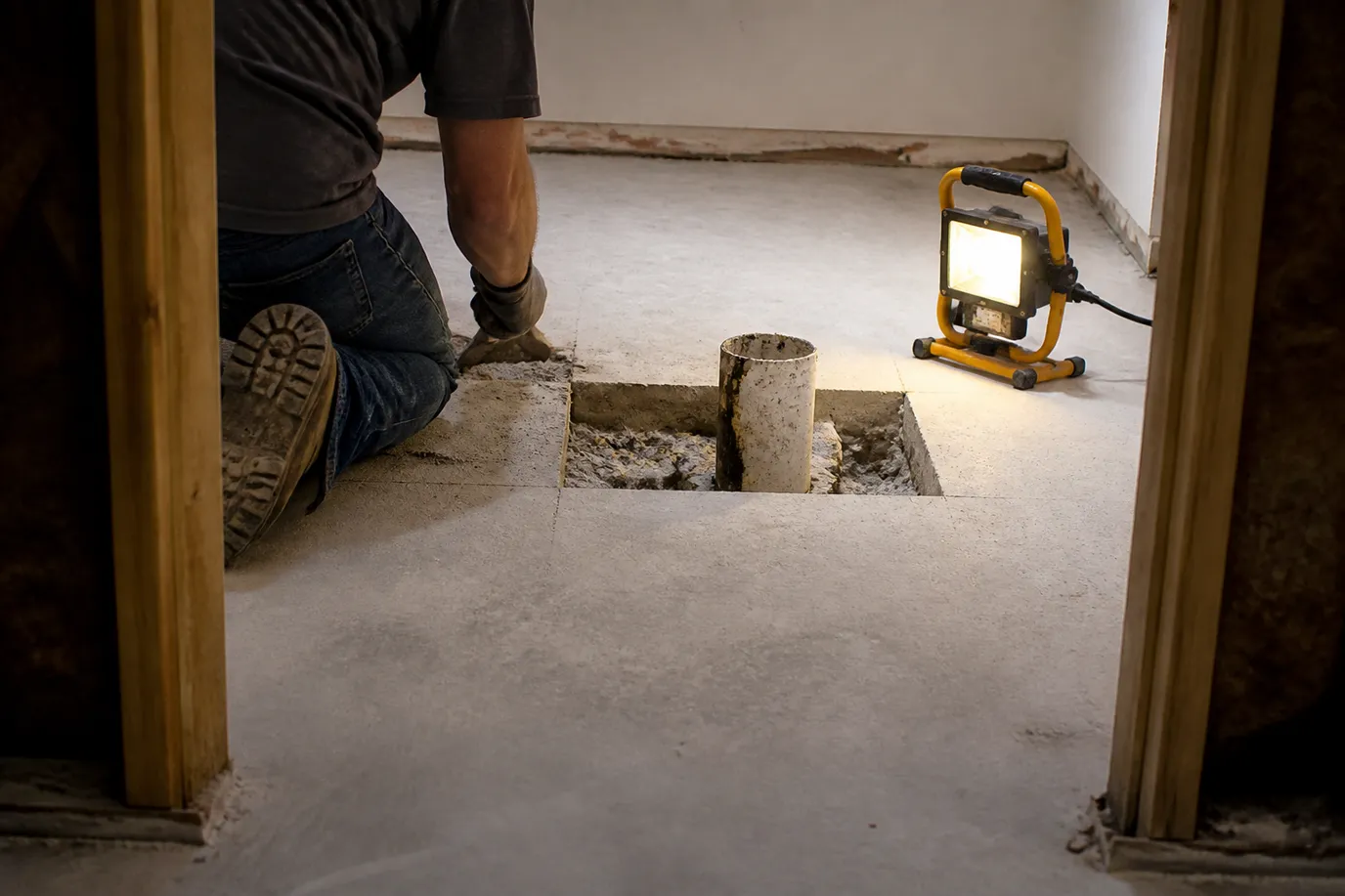
Slab-on-grade construction is common across the Phoenix area. During construction, the supply lines went into the soil or a bed of sand, and the concrete was poured on top. A slab leak is a break or pinhole in one of those buried lines, or at a fitting along it.
The pipe at fault is nearly always a pressurized supply line, hot or cold. A drain beneath the floor can leak as well, but only while water is flowing through it.
Copper in contact with soil or concrete can corrode from the outside, while mineral-heavy water attacks it from within. The result is a pinhole that enlarges over time. Lines can also chafe against gravel or each other as the ground moves slightly.
Installation matters too. A poorly seated fitting or a sharp bend that strains the tube may not fail until many years after the house was finished.
Slab jobs combine detection, access and finish work, and each part can shift the total. These four factors explain most quotes.
Find out who patches the concrete and restores the flooring. Some contractors include it, others do not.
The City of Mesa's 2025 water quality report gives hardness between roughly 12 and 16 grains per gallon. Mineral-rich water can speed pitting inside copper, so lines under the slab may age faster than owners expect.
A second leak on a line that was already repaired once usually means the rest of that run is tired too. Ask whether the remaining pipe should be tested or replaced.
The first step is a meter and pressure check with the house shut off. Next the technician separates the hot side from the cold to learn which line is losing water.
Sensitive microphones then pick up the sound of escaping water as the tech walks the floor, and a thermal camera can help on a hot line. The goal is a mark on the floor so small that only a small opening is needed.
Spot repair means opening the concrete over the break, replacing the section and patching. A reroute retires the buried line and brings new pipe in through the attic or walls. A repipe replaces the supply lines across the whole house.
The right route depends on how often that line has leaked, where it runs and what flooring sits above it. Ask the contractor why the recommended option beats the alternatives.
Because the pipe is buried, the clues show up in other places.
The plumber isolates the hot and cold sides and watches the meter. Then listening equipment and thermal imaging help narrow where the water is escaping. The goal is a marked spot on the floor, not a guess.
A hot line and a cold line can leak under the same slab. Testing each side separately keeps the repair focused and avoids breaking concrete in the wrong place.
A spot repair breaks the slab at the leak and replaces the damaged section. A reroute abandons the buried line and runs new pipe through walls or the attic. A repipe replaces the system when several lines are failing.
Ask for the options side by side, with the reason for each. If the pipe is old and has leaked more than once, a larger fix may cost less over time. The repiping page explains whole-home replacement.
Simple steps limit damage and speed the search.
Locate hidden water loss behind walls, under floors or along the buried pipe, then decide how small an opening can be.
Swap aging galvanized, pitted copper or brittle early plastic lines for new pipe throughout the home.
Extract water, dry the structure and rebuild after a leak, a burst pipe or storm intrusion.
A warm floor patch, water sounds with every tap closed and a moving meter are the classic hints. A search confirms the location before anyone cuts concrete.
Sometimes. A reroute through the attic skips the slab, and a small access hole may suffice for a spot repair. Ask which options suit your layout.
Water under concrete can soften the soil and stain flooring, so act early. If you notice cracks or heaving, ask a professional to look.
Policies differ. Some pay for resulting damage but not the pipe. Read yours before work begins.
It can. Water rising through the floor, a dial that never rests or a hot patch on the concrete all justify an immediate shutoff and a call. A slow seep can usually wait until morning, but it should not be left for days.
Usually yes. Listening gear, heat imaging and pressure testing narrow the spot first, so concrete is opened only where needed.
Policies differ on access and damage. Ask your insurer, and keep the plumber's written finding and photos.
If water is coming up or the bill is climbing fast, treat it as urgent. Close the main valve and call.
It depends on pipe age and how many leaks exist. Ask for both options with the reasons.
Shut the house valve, then call. Say where the dampness shows and what the meter is doing.
Service area centered on Mesa and nearby Maricopa County cities.