Water Heater Installation & Replacement
Swap out a worn tank for a unit sized to the household, with the fuel and location that fit.
New builds need plumbing at two stages: rough-in before walls close and finish after. Planning both well avoids change orders and delays.
Bring plans, fixture lists and the builder's schedule to the first call.
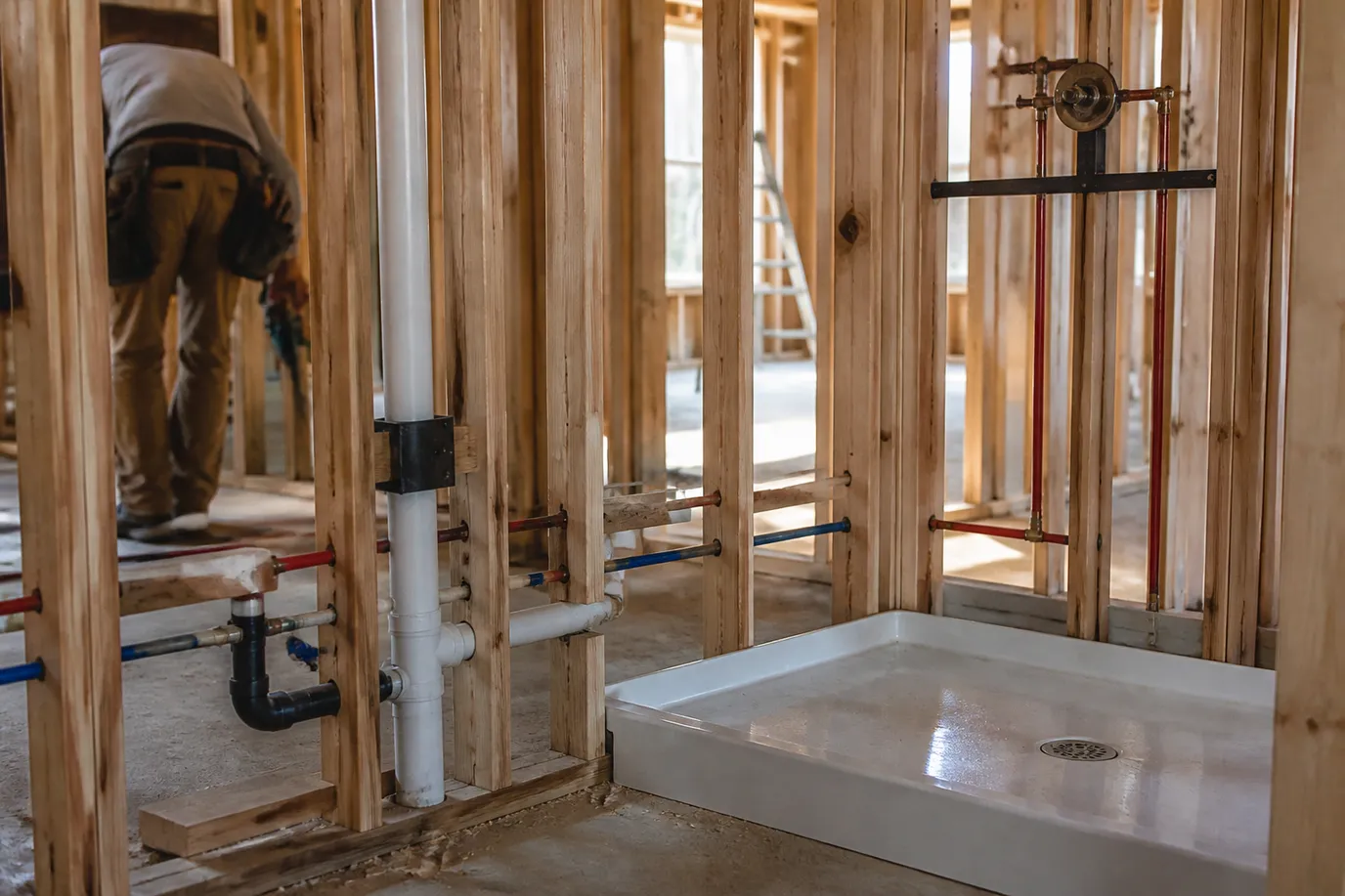
The crew lays drain lines under the slab, sets stub-outs and runs supply lines. Everything must match the plans. Changes after the pour cost much more.
Check fixture locations against the plans before the slab pour.
Rough plumbing is inspected before walls close and again at final. The inspector checks pressure, venting and layout. A failed inspection delays the schedule.
Ask who schedules each inspection.
Southeast Mesa has seen heavy growth, including master-planned areas like Eastmark. New homes there mostly use PEX and PVC.
Check the builder warranty before paying for repairs on a recent build.
New plumbing follows plans and fixture counts.
Get fixed quotes tied to the plans, not open-ended ones.
After drywall and paint, the plumber sets toilets, sinks, faucets, tubs and appliances. Water goes on, fixtures are tested and leaks are corrected.
Walk the house with the plumber and list any fixes.
Adding a bathroom or kitchen means tying into existing lines. The plumber checks pressure and capacity first.
Ask whether the existing water line and sewer lateral can handle the new load.
Plumbing happens in phases.
Share plans early. Ask about permits, inspection scheduling and who supplies fixtures. A clear timeline avoids delays between trades.
Adding a bathroom or an ADU needs new supply and drain lines tied to existing ones. Ask how the tie-in will be done. See the repiping page for older homes.
Cost depends on the plans and the number of fixtures. Ask for a written bid. Start dates depend on the schedule.
Plumbing sits between several trades. The slab crew needs underground lines in place before concrete arrives, the framers need to know where drains run, and the drywall crew waits for the top-out inspection to pass. A missed date at any stage pushes the whole schedule.
Ask who calls for each inspection and who is on site when the inspector arrives. A failed inspection usually means a return visit, so confirm how corrections are handled and whether they change the bid.
A clear bid names the fixture count, the pipe materials, the water heater type and the gas work if any. It states what is included in rough-in and what waits for trim. Allowances for fixtures should be written down, since a homeowner who picks a pricier faucet later may owe the difference.
Ask also about warranty terms in writing, who supplies the fixtures and what happens if plans change mid-project. Changes after rough-in cost more because pipe in a finished wall is harder to move.
Swap out a worn tank for a unit sized to the household, with the fuel and location that fit.
Extend or mend gas piping for ranges, dryers, barbecues and patio fire features.
Change out a shower, tub or valve and set the drain and rough-in to code.
Say you are a builder on the call, and the dispatcher can find out who handles it.
Before the slab design is finalized.
The contractor or builder. Confirm in writing.
Often yes. Describe the project on the call.
Someone answers overnight. Rough-in and finish work is planned around the builder's schedule, but a burst line or job-site leak can be reported whenever it happens.
Share plans when you call.
Ask the company when you request a bid.
Describe the project and the tie-in.
Tell the dispatcher about the project on the call. The dispatcher will take it from there.
Service area centered on Mesa and nearby Maricopa County cities.