Leak Detection
Locate hidden water loss behind walls, under floors or along the buried pipe, then decide how small an opening can be.
A new shower or tub changes how a bathroom works. The drain, the valve and the waterproofing all have to be right so the room stays dry for years.
Ask who handles tile, glass and drywall, since plumbing is only part of the job.
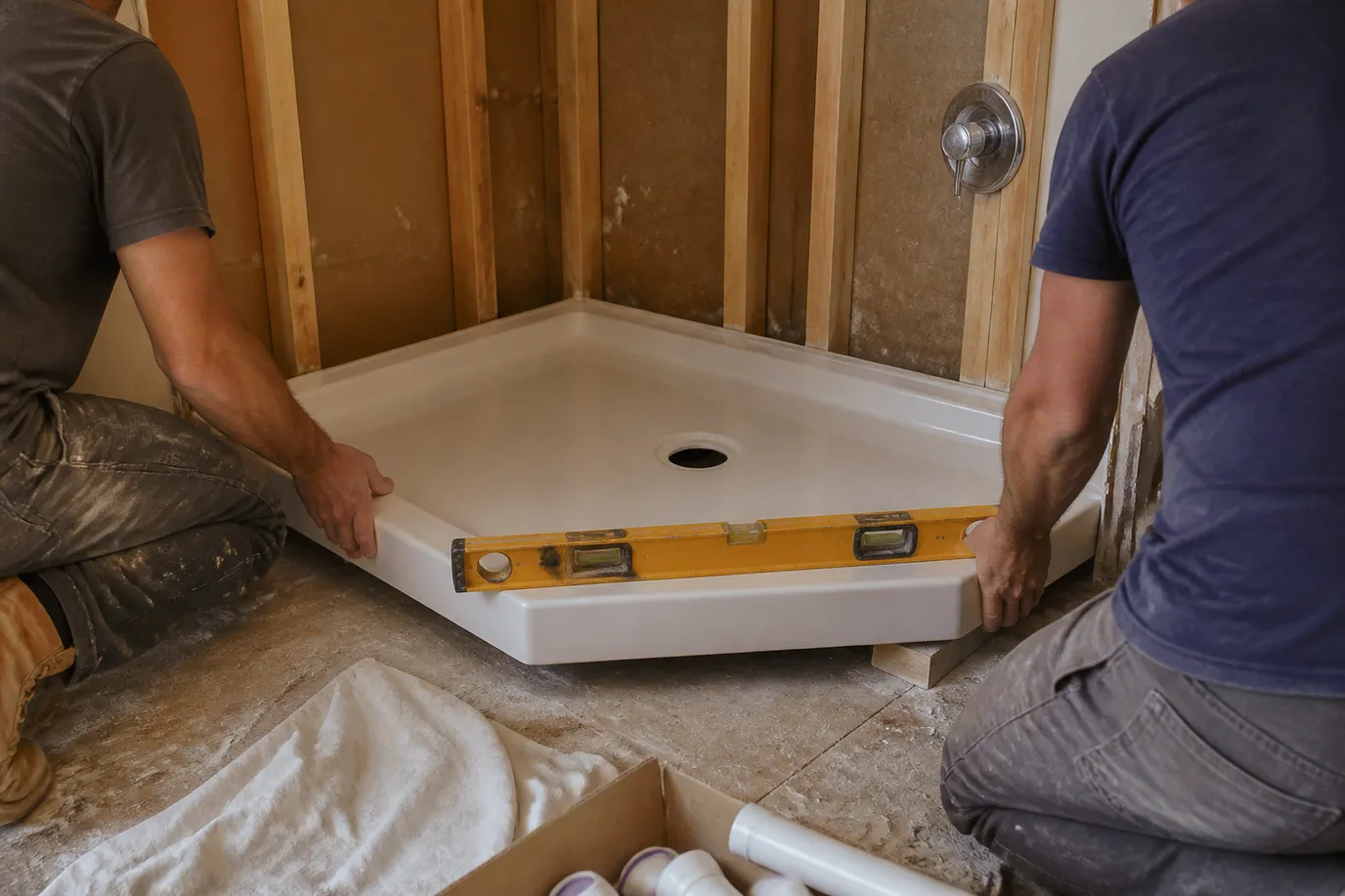
A shower or tub replacement may include demolition, a new drain, a new valve, waterproofing, the fixture and finish materials. Plumbers handle the drain and valve and often coordinate the rest.
Ask for a scope that names each step and who does it.
A pressure-balancing valve keeps temperature steady when someone flushes a toilet. A thermostatic valve lets you set a temperature. Which one fits depends on your layout.
Place the valve where it can be reached for repair.
Hard water leaves spots on glass and chrome. Choose finishes that wipe clean, and consider a softener for the whole house.
Home age matters. Pre-1990 houses may have galvanized or early plastic pipe behind the wall. Check before closing it up.
These projects vary widely. The biggest drivers follow.
Compare quotes by the same scope, including tile and glass.
In slab homes, a drain relocation means cutting concrete. Moving the drain costs more than keeping it in place. Ask whether a new fixture can use the old drain location.
Filling the shower pan with water before tile goes on exposes leaks while they are cheap to fix.
Curbless showers and wide entries take more planning for the floor slope and the drain. A low curb is simpler.
Ask about grab bar blocking in the walls and seat options.
Leaks behind a wall are the costly kind.
A cartridge swap often fixes a dripping valve. A leak behind a wall needs access, and a plumber should say how large an opening to expect. Ask who restores the tile or drywall.
A remodel needs rough-in plumbing, a pan or liner test and finish fixtures. Ask for a clear scope and a timeline. For a drain that is slow, see the drain page.
Cost depends on the work and the finishes. Same-day service depends on the schedule.
Moving a shower or tub changes the drain and the supply lines. In a slab home, a new drain location may mean cutting concrete, which affects the budget. Settle the layout before demolition begins.
Waterproofing is the layer you never see again. Ask what membrane or pan system is used, how the corners are sealed and whether the pan is flood-tested before tile goes on. A slow leak behind a finished wall costs far more than the test.
Locate hidden water loss behind walls, under floors or along the buried pipe, then decide how small an opening can be.
Stop drips, restore weak flow, free seized stop valves and mend leaking hose bibs.
Extract water, dry the structure and rebuild after a leak, a burst pipe or storm intrusion.
Often several days to a week or more, depending on the scope.
Often. The drain location and wall framing have to allow it.
Often for new valves or drain changes. Ask the contractor.
The waterproof base that directs water to the drain.
Yes. For an active leak, close the fixture supply or the house main and then call. Planned replacements are booked in daytime.
Yes. Expect an access opening, and ask who handles tile repair.
Yes. Describe the project when you call.
A worn cartridge is common. Replacement is usually quick.
Tell the dispatcher about the room on the call. The dispatcher can set up a visit.
Service area centered on Mesa and nearby Maricopa County cities.