Water Softener Installation & Repair
Put in a softener to tame Mesa's mineral-heavy water, or revive one that stopped regenerating.
A filter targets what you want out of your water, like chlorine taste, sediment or specific contaminants. The right choice starts with what the water report says.
Ask for the filter's certification and the cost of replacement cartridges.
The City of Mesa publishes a water quality report each year. It lists disinfectants, minerals and regulated contaminants at the tap. Lead measured at the 90th percentile was 5.01 parts per billion in 2024, below the 15 ppb action level.
Use the report to decide what to filter. A filter should fit a goal, not a sales pitch.
A whole-house filter treats everything entering the home and handles sediment and chlorine well. An under-sink or countertop filter treats only drinking water.
Reverse osmosis systems deliver higher-purity water at one tap and waste some water in the process.
The city uses chlorine and, at times, chlorine dioxide for disinfection, according to its 2025 report. A carbon filter reduces chlorine taste.
Certified filters list what they remove. Look for the standard on the packaging.
Filter cost depends on the system and the installation.
Ask for the yearly cost of cartridges before you buy.
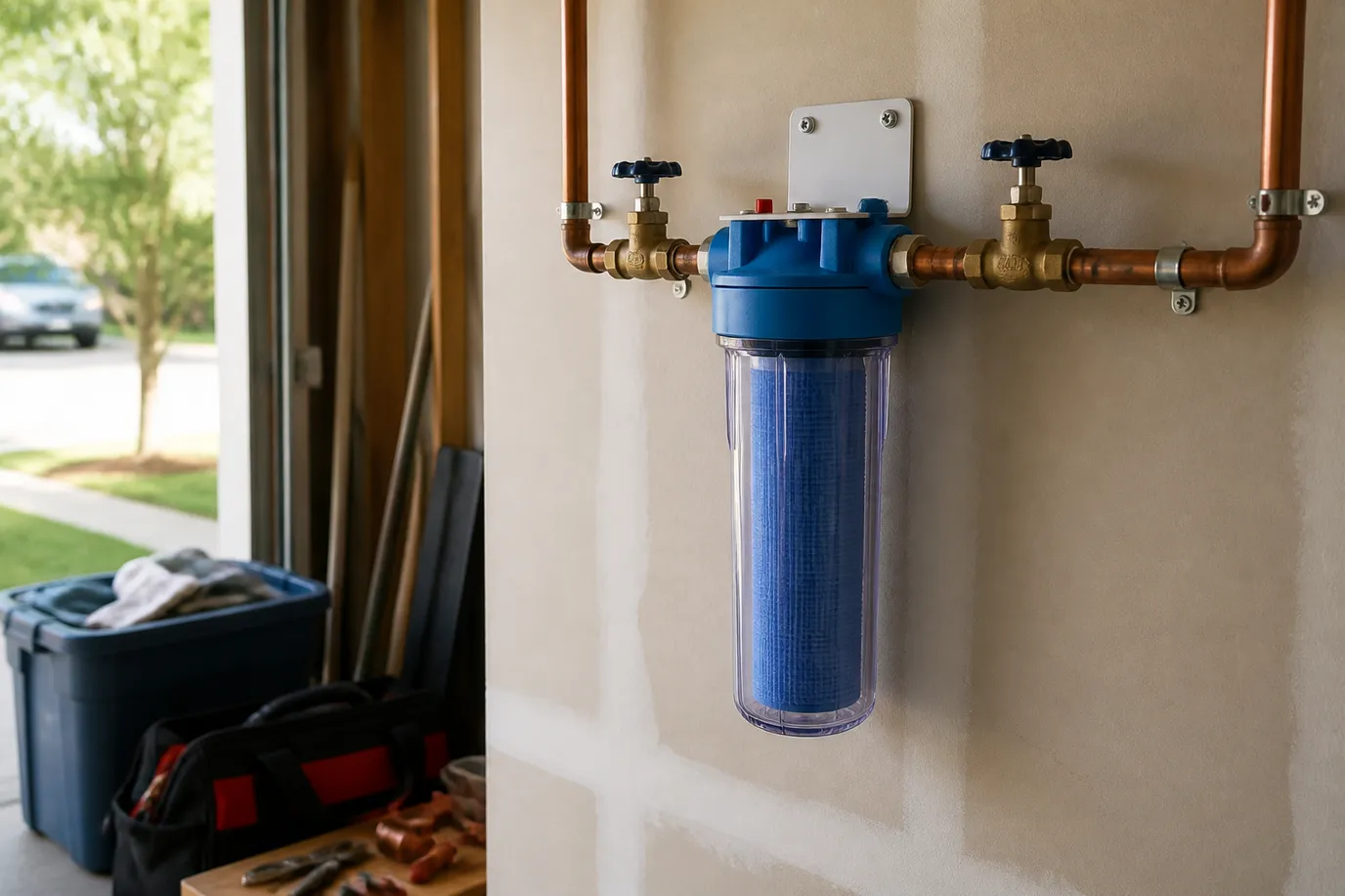
A whole-house filter installs near the main with a bypass valve. An under-sink unit connects to the cold supply and may add a dedicated faucet.
Change cartridges on schedule. An old cartridge can lose effect and harbor buildup.
A filter does not remove hardness. A softener does not remove chlorine taste. Many homes use both.
Ask the plumber to explain the order of equipment so each does its job.
Filters and softeners solve different problems.
A whole-house unit treats every tap and protects appliances. An under-sink system treats the drinking tap. Reverse osmosis gives the cleanest drinking water but needs a drain connection and a storage tank.
All systems need filter changes. Ask how often and what the replacement cost is. A system that is hard to service tends to get ignored.
Cost depends on the system and the plumbing work. A test of your water helps decide which stages you need. If hardness is the main complaint, see the softener page.
A filter is only as good as its last cartridge. Sediment stages clog first, carbon stages lose their taste benefit over time, and a neglected cartridge can start to harbor bacteria. Write the change date on the housing.
Compare systems on the yearly cost of cartridges, not only the purchase price. A cheap unit with expensive filters can cost more over five years than a better one with common sizes.
Put in a softener to tame Mesa's mineral-heavy water, or revive one that stopped regenerating.
Stop drips, restore weak flow, free seized stop valves and mend leaking hose bibs.
Flush scale from a wall-hung unit, clear error codes and repair or replace it when hard water wins.
The city publishes its results each year. Read the current report for the details.
Not always. Point-of-use filters may be enough for drinking water.
Often every few months. Follow the maker's schedule.
Some do. Ask about flow rate for the system.
Yes. If the filter housing leaks, close its supply and call. New installations are booked during the day.
Safe water can still taste of chlorine or carry sediment. A filter is a comfort choice.
A filter removes particles or chemicals. A softener removes hardness minerals.
It depends on the model and your water. Follow the maker's guidance.
Call and describe the issue. The dispatcher can set up a visit.
Service area centered on Mesa and nearby Maricopa County cities.