Sewer Camera Inspection
Look inside the sewer pipe on video before you pay for a repair, list a home or close on one.
When a sewer line is collapsed, badly offset or failing in many places, replacement is the lasting fix. It means a new pipe from the house to the connection.
Ask for a camera record and a written scope before you agree.
One defect in an otherwise sound pipe calls for a repair. Several breaks or a long sag usually point to replacement. The camera footage shows which you have.
Replacement costs more upfront, but it ends the cycle of repeat repairs.
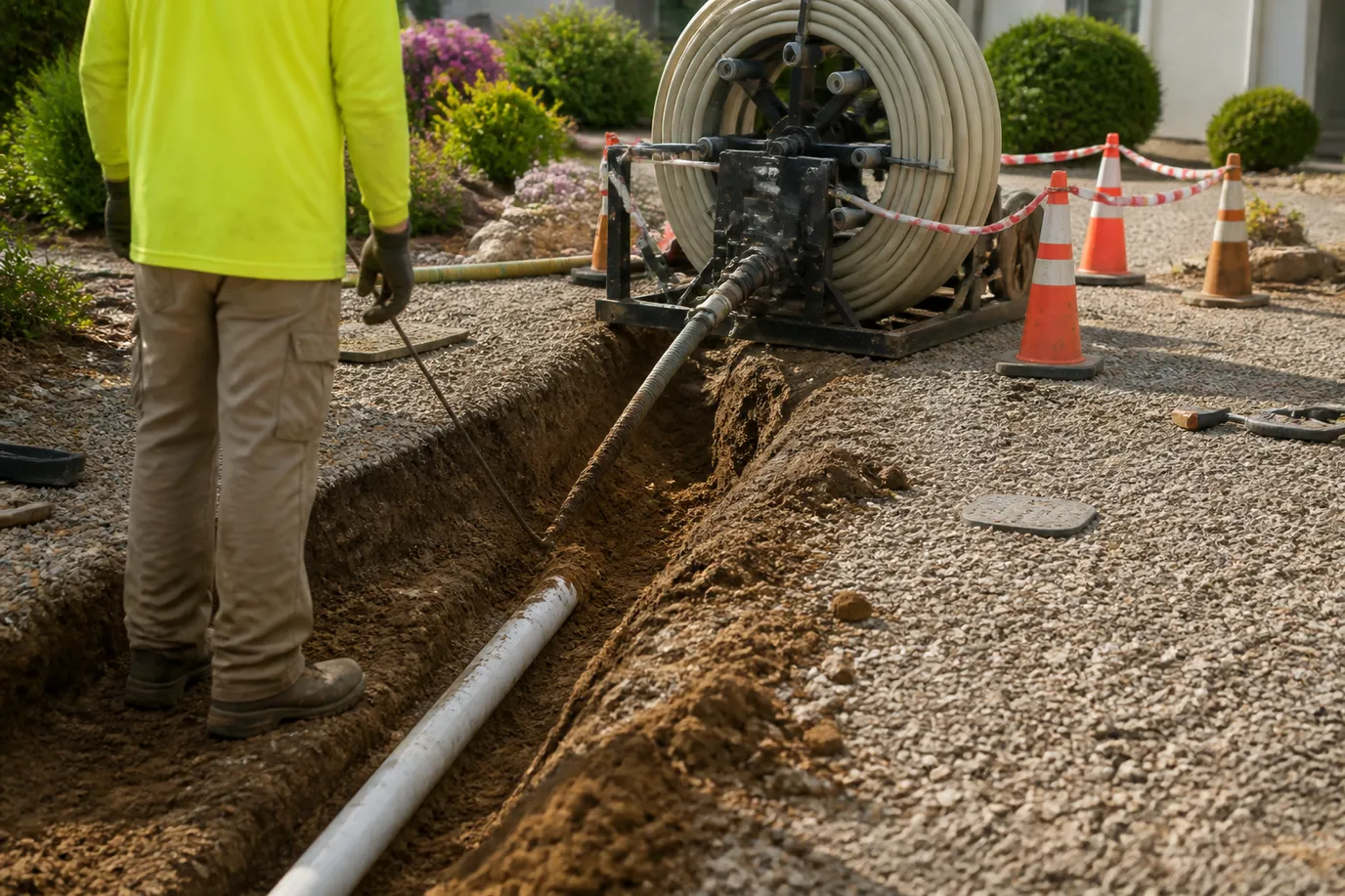
Open trench digs a path along the line, removes the old pipe and lays new PVC. Trenchless pipe bursting pulls a new pipe through the old one from small pits.
Trenchless limits damage to the yard but needs the right conditions. Ask why the contractor recommends one method.
Many Mesa yards use gravel and desert plants that are simple to restore. Concrete driveways and block walls are the harder cases.
The lateral from house to main is the owner's responsibility. If the problem is in the street main, the city handles it.
Replacement cost depends on length, depth and what covers the path.
Compare quotes by scope, including restoration and permits.
Sewer work usually needs a permit and an inspection. Ask who pulls the permit and how inspections are scheduled.
Verify the contractor's license with the Arizona Registrar of Contractors, and note that sewer work can sit under its own license classification.
You may lose use of the plumbing for part of a day. Plan for the dig to cross driveways, sidewalks or landscaping.
Photograph the yard before work starts so you can compare after.
Replacement costs more up front but may save repeated visits.
An open trench exposes the pipe along its full length. Trenchless pipe bursting drags new pipe along the old route, working from a couple of small pits. The right choice depends on depth, soil, obstacles and what lies above the line.
Ask how the crew will protect landscaping and what the plan is for concrete. If the line passes near a property line, talk to your neighbor before work begins.
Replacement cost depends on length, depth and method. A written scope, a clear timeline and a permit plan are reasonable asks. Same-day replacement is not typical, but an emergency cleanout may restore service while you plan. See the drain cleaning page for a temporary fix.
Look inside the sewer pipe on video before you pay for a repair, list a home or close on one.
Repair a cracked, root-filled or sagging sewer pipe, from one spot fix to a longer section.
Use high-pressure water to strip grease, mineral scale and roots from lines a cable only partly cleared.
Often one to a few days, depending on length and method. Ask for a schedule.
Most sewer work does. Ask the contractor who handles it.
Usually, with limits on water use. Ask what to expect.
The tie-in at the main may involve the city. A plumber can tell you what is required.
Yes. Replacement is planned work. A line that is backing up now can still be reported at any hour, and the dispatcher handles the urgent part first.
That depends on length, depth and method. Ask for a schedule, and ask whether the toilets and water will keep working meanwhile.
Not always. It suits some pipes and layouts, while others need an open trench.
Usually yes. Ask who pulls it and how inspections are scheduled.
Often not for part of the day. Ask the crew about their plan.
Call and describe what the camera showed, if you have it. The dispatcher can arrange a visit.
Service area centered on Mesa and nearby Maricopa County cities.