Drain Cleaning & Unclogging
Open slow or blocked kitchen, bath, laundry and main drains, and find out what keeps closing them.
A cable bores a channel through a blockage. Jetting scours the whole pipe wall with pressurized water instead. It suits lines that keep clogging because buildup is still clinging to the sides.
Jetting works best after a camera shows the pipe is sound.
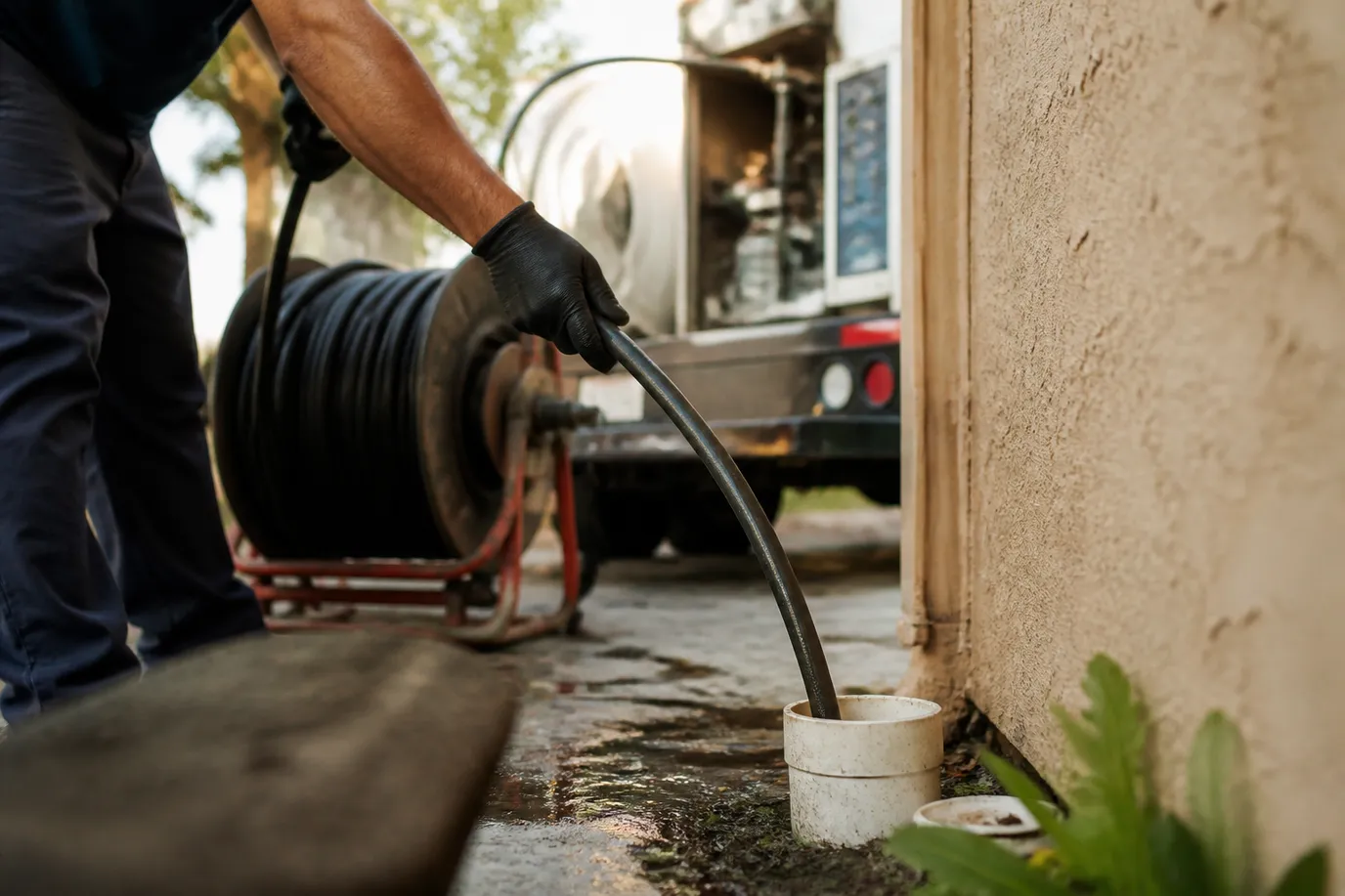
A jetting machine pumps water through a hose with a specialized nozzle. The jets face backward and forward to pull the hose through the pipe and blast debris off the walls.
The result is a pipe wall scoured back to the base material, not a narrow hole through the middle of a clog. That is why jetting suits recurring blockages.
Jetting can stress a pipe that is already cracked or offset. A quick camera pass beforehand shows whether the pipe can handle the pressure.
Some pipe types and conditions call for a different method. Ask the plumber why jetting is recommended and what it will do for your line.
Hard water leaves scale in drain pipe, particularly in older cast iron, and the film catches grease. Jetting removes both.
Roots seek moisture and enter at joints. Jetting clears them for now, but the opening remains, so ask about a repair if roots keep returning.
Jetting costs more than a basic cable pass, and the extras depend on the line.
Ask whether the camera pass is included and whether you get the footage.
The plumber opens the cleanout, feeds the hose in and works along the line. Water and debris flow out toward the sewer. Expect noise and some water at the work area.
A camera pass afterward confirms the pipe is clear and shows any damage the buildup was hiding.
Restaurants and multi-unit buildings jet on a schedule. A single home may need it once, then keep the line clear with good habits.
If clogs return within months after jetting, the cause is probably a defect in the pipe, not buildup. Ask for a follow-up inspection.
Jetting is not for every clog. It suits certain problems well.
A jetter pushes water through a hose with a nozzle that fires jets backward and pulls itself along the pipe. The water clears debris and carries it downstream. A camera pass before and after shows the pipe condition.
Jetting is safe on sound pipe but risky on fragile or broken lines. A camera check first tells the crew whether the pipe can take it. If it cannot, the sewer line repair page explains repair options.
Price follows the length of the line, how easy it is to reach, how much buildup there is and whether a camera pass is part of the visit. Ask the dispatcher how the visit is charged and what is covered. Same-day availability depends on the schedule, so mention if the line is backing up.
Open slow or blocked kitchen, bath, laundry and main drains, and find out what keeps closing them.
Look inside the sewer pipe on video before you pay for a repair, list a home or close on one.
Repair a cracked, root-filled or sagging sewer pipe, from one spot fix to a longer section.
It can be, if the pipe is sound. A camera check first shows whether jetting is wise.
A cable pushes through the clog. Jetting scours the whole pipe wall with water.
It clears them for now. If roots keep returning, a repair at the entry point is the lasting fix.
Often an hour or two for a home line. Ask for an estimate on your site.
Calls are answered at any hour. Say if the main line is backing up into the house, and the dispatcher lines up a contractor. Timing follows that contractor's calendar.
It cleans the pipe wall more thoroughly, but a cable is enough for many simple clogs. A camera helps decide.
It can if the pipe is cracked or fragile. A camera check first reduces that risk.
It depends on the line length and buildup. Ask the dispatcher for a time range.
They can, because the opening stays. A repair or liner may be needed for a lasting fix.
Call and describe the history. The dispatcher can set up a visit to look at your line.
Service area centered on Mesa and nearby Maricopa County cities.