Sewer Camera Inspection
Look inside the sewer pipe on video before you pay for a repair, list a home or close on one.
A damaged sewer line backs up sewage, draws roots and can leak into the soil. Repair fixes the damaged section without replacing the whole lateral. Sewage rising inside the house means stop all water use and dial the all-hours line immediately.
Get a camera look before agreeing to any sewer work.
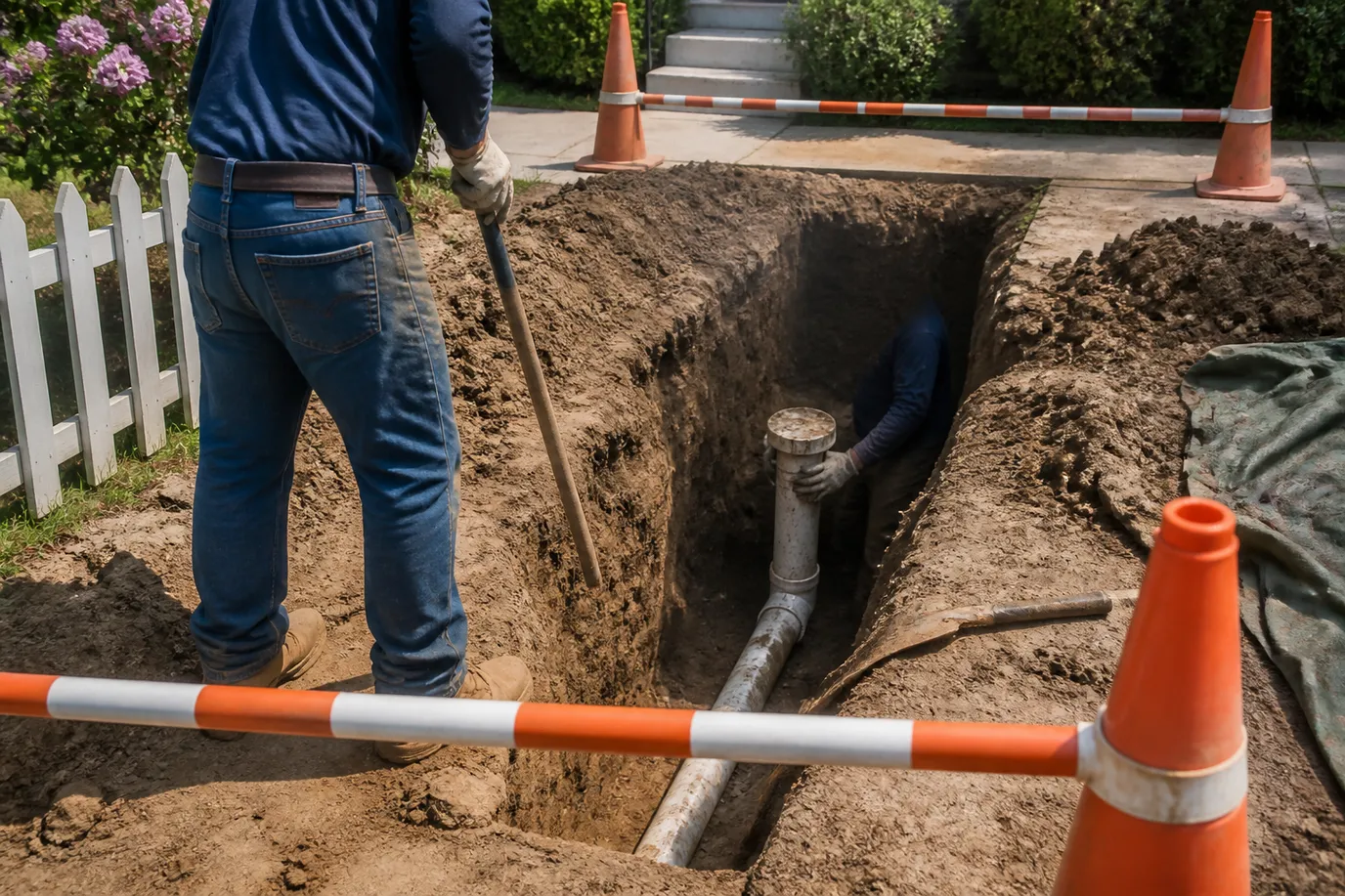
Cracks and offset joints let roots in. A sag, called a belly, holds water and waste. A collapsed section blocks the line completely.
Older clay and cast iron pipe are more prone to these problems. Newer PVC lines can fail at joints or after shifting soil.
A camera inspection shows the defect and its location. A locator marks the spot above ground, and depth tells the crew how deep to dig.
Ask for the footage and a note on the pipe material. The record helps you compare quotes and plan repairs.
Sewer repair varies a great deal. These are the main drivers.
Ask who handles permits and what restoration is included.
The City of Mesa says owners maintain the lateral from the house to the main. If the defect is in the main under the street, the city handles it.
Call 480-644-2262 for sewer blockages and sewer gas odors in the city main. The city charges a fee to come onto the property and asks for a signed waiver.
A spot repair digs to the damaged section and replaces it. A liner repair cures a new pipe inside the old one with little digging. A partial replacement covers a longer stretch.
Each method has limits. Liners need a pipe that holds its shape, and open-trench repairs need space and permits.
Run a camera again to confirm the line is clear and flows to grade. Ask for the new footage and a written description of the work.
Keep the records. They help at resale and with any warranty claim.
A failing lateral gives plenty of warnings before it backs up.
A camera shows the pipe material, the location of damage and its depth. With that footage, the plumber can describe a spot repair, a liner or a replacement. Ask to see the video so you understand what you are paying for.
A spot repair works for a localized crack. A liner seals a pipe that is sound but leaking at joints. Replacement suits pipe that is collapsed, offset or full of defects. The replacement page and camera page give more detail.
The City of Mesa maintains the public main, and owners maintain the lateral from the house to the main. A plumber can identify which side the problem is on. Homes on septic systems need a septic specialist, and this page covers city sewer laterals.
Ask about permits and inspections for the work, and who handles them. Cost depends on depth, length, access and surface restoration, so ask for the scope in writing.
Stopping the flow helps limit damage.
Look inside the sewer pipe on video before you pay for a repair, list a home or close on one.
Renew the lateral between your house and the main when patching would only delay the next backup.
Open slow or blocked kitchen, bath, laundry and main drains, and find out what keeps closing them.
Repeat backups, gurgling drains and a sewer smell are warning signs. A camera inspection confirms what is wrong.
Sometimes. Liners and some small repairs need little digging, but not every pipe qualifies.
The city handles mains under streets and alleys. A plumber can tell you which side the problem is on.
Sewer gas can be unpleasant and, in high levels, harmful. Ventilate and call if the smell persists.
Stop using sinks, tubs, toilets and the washer, since every gallon adds to the backup. Keep children and pets out of the wet area and call. A contractor can clear the blockage first and then inspect the pipe for damage.
Repeated backups, gurgling and damp yard spots are common signs. A camera inspection confirms it.
The homeowner is generally responsible for the lateral to the main. Confirm the dividing point with the City of Mesa.
Sometimes. Lining and pipe bursting work through small access holes, but only some lines qualify.
It depends on depth, length and access. The dispatcher can explain how the visit is charged before dispatch.
Stop using water and call. Tell the dispatcher which drains are affected.
Service area centered on Mesa and nearby Maricopa County cities.