Leak Detection
Locate hidden water loss behind walls, under floors or along the buried pipe, then decide how small an opening can be.
Pools in Mesa lose water to dry heat every day. The question is whether the loss is normal evaporation or a leak in the shell, the plumbing or the equipment.
Run the bucket test before you call. It takes a day.
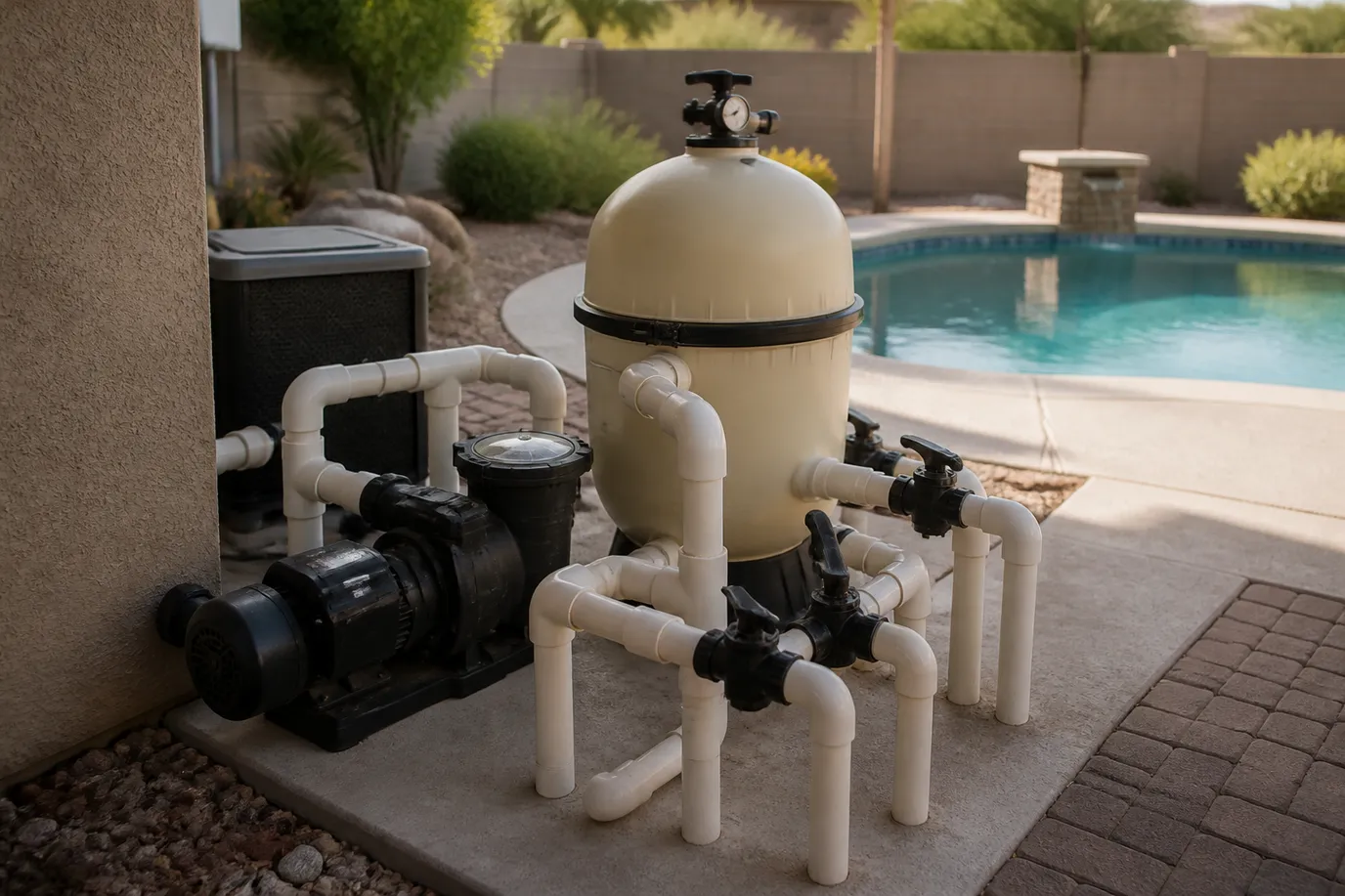
Dry heat and wind pull water out of pools quickly in summer. A bucket test compares your pool's loss to a bucket of water on a step. If both drop the same, it is evaporation.
If the pool drops more than the bucket, run the test again with the pump off. A change in the rate points toward the plumbing, and no change points toward the shell or fittings.
Common spots are the skimmer, light niches, return fittings, the pump seal and buried pipe between the pad and the pool. Autofill valves can also hide a leak by topping off the water.
A leak on the pressure side shows up when the pump runs. A leak on the suction side often pulls air, so the pump struggles to hold prime.
In summer, a pool can lose a lot of water without a leak. Keep a log of the water level and note any autofill use.
Backwash lines and filter drains sometimes tie into the sewer. Ask the plumber how yours is plumbed before any work.
Pool leak work varies widely with the size of the system and the leak location.
Ask whether the detection fee credits toward repair. Practices differ.
The contractor may pressure test the lines, dye test fittings and listen to the shell. Plugging the lines one at a time shows which one holds pressure.
Ask what methods the contractor uses and what the report will show. A clear answer ties the test to the area of concern.
A bad fitting is a small repair. A cracked buried line is a larger job that may need digging up the deck. A leak in the shell needs a different approach.
Get a written scope and ask about patching the deck or landscaping.
Evaporation is normal, but some losses are not.
A technician runs a bucket test, isolates lines with a pressure test and uses dye or listening gear near suspect spots. Plumbing leaks are separate from shell cracks, so the finding matters.
Plumbing repairs involve cutting concrete or replacing lines. Shell repairs need a pool specialist. Ask what the plumber can fix and what needs a pool builder.
Cost depends on the pool and the work. Same-day service depends on the schedule. Ask which lines and equipment the company handles. See the leak detection page for household lines.
Locate hidden water loss behind walls, under floors or along the buried pipe, then decide how small an opening can be.
Test and maintain the device that keeps sprinkler and yard water from flowing back into the home's supply.
Fix or renew the supply pipe running from the street meter to your house, including trenchless options.
It varies with heat, wind and sun. Measure it with a bucket test and compare to your usual summer loss.
Yes. A pool that is topped off often can add noticeably to a bill. Check the autofill valve.
Shell repair is a specialty job. Describe what you see, and the dispatcher can tell you who handles it.
If you suspect a suction leak, turn the pump off to avoid damage. Call and describe the symptoms.
Yes. Report a pool that is losing water quickly, or a leak at the equipment pad, right away. Switch the pump off if the level drops toward the skimmer.
Run the bucket test. A pool that drops more than the bucket suggests a leak.
Ask the dispatcher. Plumbing and shell work are different trades.
Not always. Ask before anyone drains it.
Try the bucket test, then call and report the result and where the equipment pad sits.
Service area centered on Mesa and nearby Maricopa County cities.