Pool Leak Detection & Repair
Separate real pool water loss from summer evaporation, then locate the failing line, fitting or valve.
A backflow device keeps dirty water from flowing backward into the clean supply. Irrigation systems and pools are common places for one. Testing keeps the device working.
Ask your water provider whether testing is required at your address.
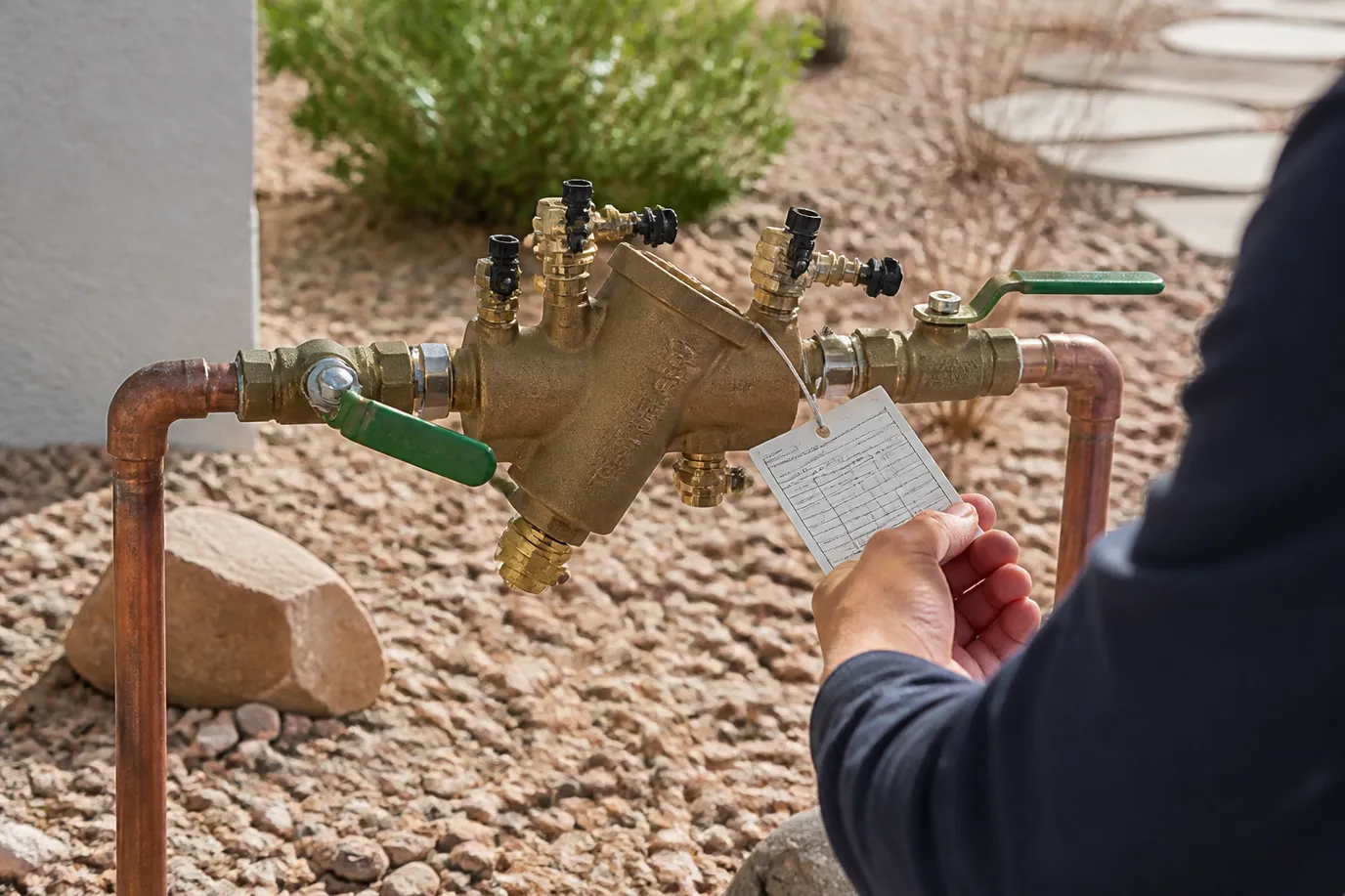
A drop in supply pressure can pull water backward from a yard or pool into the house line. That water may carry fertilizer, bacteria or chemicals.
A backflow device is a one-way gate that stops this.
Common types include the pressure vacuum breaker, the double check valve and the reduced pressure assembly. Which one a site needs depends on the hazard and local rules.
Hose bib vacuum breakers are a simple form for outdoor faucets.
The City of Mesa runs an irrigation service for roughly 300 downtown customers, and those lines must stay separate from drinking water.
Ask the City of Mesa what testing is required for your address and who may perform it.
Testing and repair costs depend on the device and the site.
Ask who files the test report.
A certified tester connects a gauge to the device and checks that each valve holds. The result goes to the water provider if required.
Failed devices are repaired or replaced and retested.
Keep the device clear of debris and protect it from cold nights. A leaking device is a sign something is wrong.
Do not bury it or cover it with a lid that traps water.
Notices and leaks both trigger service.
A certified tester attaches a gauge to the test cocks and checks every check valve in turn. The result is recorded on a form for the water provider. If it fails, the tester can repair it and retest.
Ask the City of Mesa about requirements and deadlines for your property. Missing a deadline can lead to shutoff.
Cost depends on the device and the repairs needed. Ask whether the tester files results for you. Same-day availability depends on the schedule. For irrigation leaks, the leak detection page helps.
Debris from the supply line can foul a check valve seat, and rubber discs harden after years of sun and heat. A device that was installed too low can also sit in standing water, which shortens its life.
Most failures show up as a leak from the relief port or a test reading below the minimum. A repair kit often restores the assembly, though a badly corroded body needs replacement.
Save every test report with the date, the tester's name and the serial number of the device. A water provider may ask for the history, and a clean record helps when you sell a home or add a sprinkler zone.
Separate real pool water loss from summer evaporation, then locate the failing line, fitting or valve.
Locate hidden water loss behind walls, under floors or along the buried pipe, then decide how small an opening can be.
Plumbing help for shops, offices, apartment buildings and strip-center suites.
It depends on the device and local rules. Ask your water provider.
Many places require a test yearly. Confirm for your address.
The assembly is repaired or replaced, then tested once more.
Most places require a certified tester.
Calls are taken at any hour. Routine tests are normally booked in daytime, but a device that fails or sprays water is worth reporting at once. Ask the dispatcher about timing.
It depends on the program and the device. Ask the City of Mesa.
Ask the tester when you book.
It can be repaired or replaced, then retested.
Call and describe the device. The dispatcher can set up a visit.
Service area centered on Mesa and nearby Maricopa County cities.