Drain Cleaning & Unclogging
Open slow or blocked kitchen, bath, laundry and main drains, and find out what keeps closing them.
A toilet that runs, rocks, leaks at the base or will not flush is usually a few cheap parts or a worn seal. If the bowl itself is cracked or old, replacement is the better move. A toilet spilling over or seeping at its base needs its supply valve closed, followed by a call to the all-hours line.
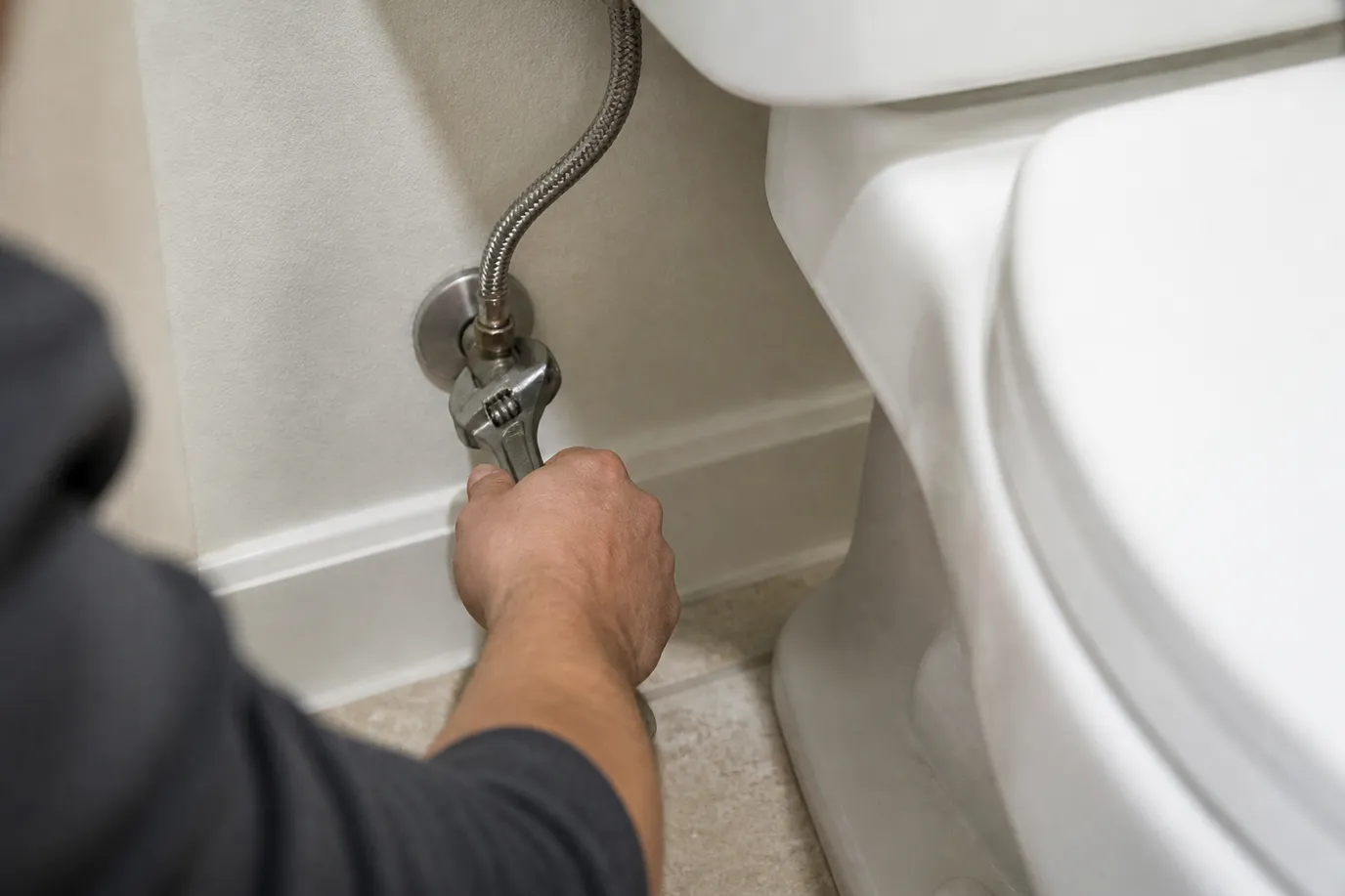
Close the supply valve behind the toilet if water is rising.
A flapper that does not seal lets water leak into the bowl, and the fill valve tops the tank up again. That can add hundreds of gallons a month without any noise.
Food coloring in the tank shows a leak. If color reaches the bowl in fifteen minutes, the flapper needs replacing.
A toilet sits on a wax ring or foam seal that connects it to the floor flange. When the seal fails or the toilet rocks, water seeps out. Tightening the bolts sometimes helps, but a soft floor or a stain means the leak has gone on a while.
If the floor around the toilet feels spongy, call. The subfloor may be damaged.
Toilet repair and installation depend on parts and the condition of the floor.
Check the rough-in distance before buying a toilet.
Mineral buildup from hard water can foul fill valves and flappers, so parts wear faster than in soft-water areas. The City of Mesa lists hardness near 12 to 16 grains per gallon.
If you replace a toilet, also replace the supply line and shutoff valve if they are old.
A plunger clears most simple clogs. If a toilet clogs again and again, the problem may be in the trap or the drain line. Slow drainage in other fixtures points to the main line.
Hard water can clog rim jets with scale. A plumber can clean them out.
A cracked bowl, an old high-flow toilet that clogs often or a model that cannot be repaired are good candidates. Newer models use less water per flush.
Ask about comfort height, bowl shape and how the new toilet fits your rough-in measurement.
Small symptoms often point to a clear fix.
A flapper, fill valve or wax ring is a small fix. A cracked bowl or a toilet that clogs often may be worth replacing. Ask for both prices so the choice is clear.
A new install includes removing the old unit, setting a new wax ring, connecting the supply and testing for leaks. Ask whether the toilet is supplied or you provide it, and whether haul-away is included.
Cost depends on the part, the toilet model and the access. Same-day service depends on the schedule. If every drain in the house is slow, the problem is in the line, not the toilet. See the drain cleaning page.
Open slow or blocked kitchen, bath, laundry and main drains, and find out what keeps closing them.
Stop drips, restore weak flow, free seized stop valves and mend leaking hose bibs.
Locate hidden water loss behind walls, under floors or along the buried pipe, then decide how small an opening can be.
A worn flapper or fill valve is the usual cause.
Many people do. A bad flange or a hidden leak calls for a plumber.
Soft spots, stains or a toilet that rocks suggest water has been leaking.
A partial clog, a trap problem or a main-line issue are possible.
Yes, call for a toilet that overflows or leaks. Close the supply valve behind the bowl. If the water keeps rising, lift the tank lid and hold the float up, then describe the situation to the dispatcher.
It depends on the toilet and the work. Ask for the price with and without the unit.
No. A cracked bowl or tank should be replaced.
It may be the design or a partial blockage in the line. A plumber can test both.
Same-day service depends on the schedule. Close the supply valve behind the toilet while you wait.
Shut the supply valve behind the bowl and call, then describe what the water is doing.
Service area centered on Mesa and nearby Maricopa County cities.