Faucet & Sink Repair
Stop drips, restore weak flow, free seized stop valves and mend leaking hose bibs.
A disposal that hums, leaks or smells usually has a simple cause. Others need replacement. A good installation also keeps the drain and dishwasher working. If a disposal drips under the sink or sends water into the dishwasher, turn it off and tell the all-hours line.
Turn off power at the switch before you reach into a disposal.
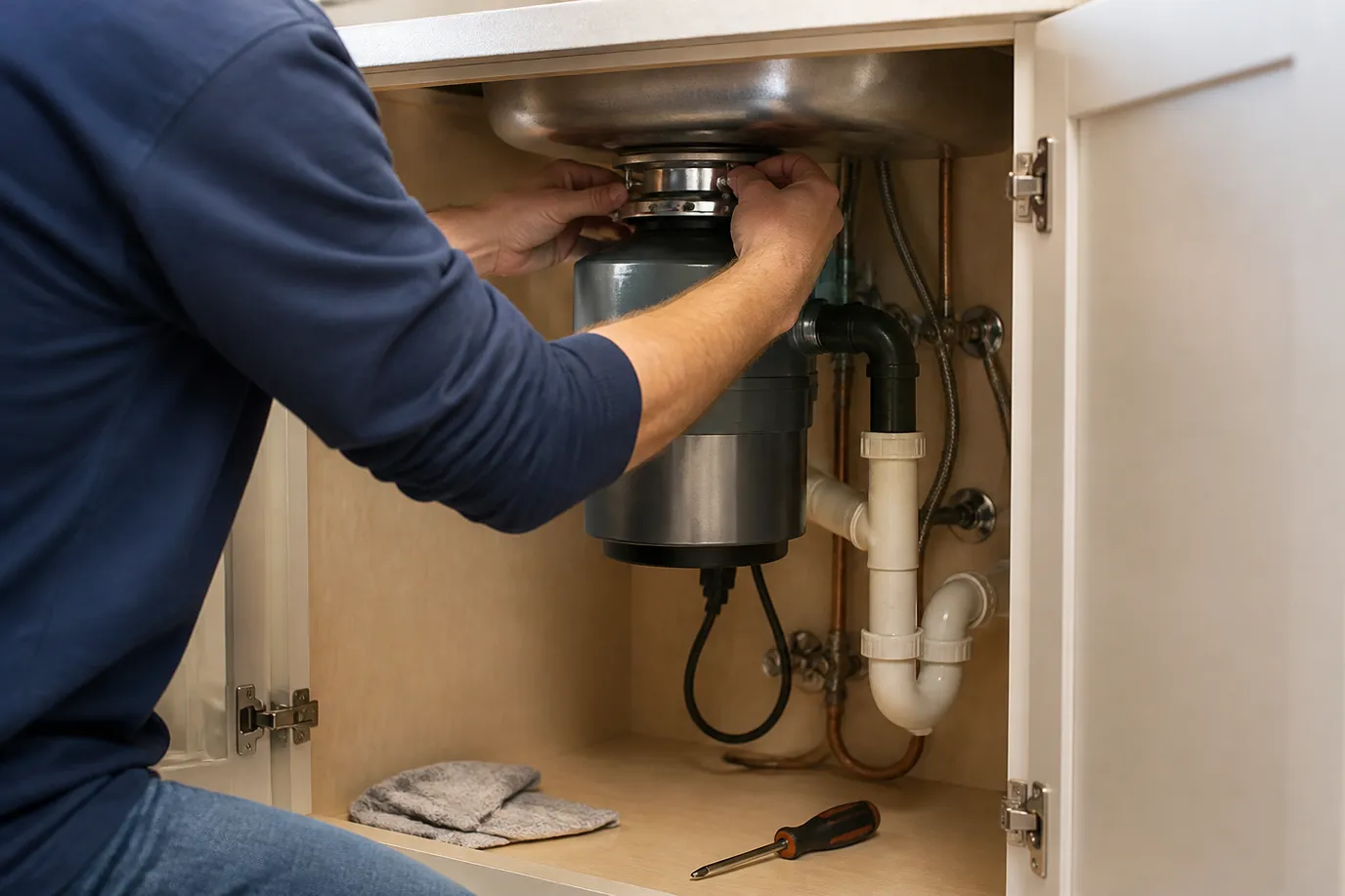
A humming sound with no spinning means the motor is working but the blades are stuck. Turn off power, then turn the blades by hand with the wrench slot underneath. Press the reset button when it frees.
Never put your hand inside. Use tongs for anything you can see.
Leaks come from three places: the flange at the sink, the connection to the drain and the body of the unit. A body leak means replacement. The others can often be fixed.
Run water and watch for drips to see which spot is leaking.
Disposal cost depends on the unit and the hookup.
Check the warranty length on the new unit.
Scale and grease catch on each other in kitchen drains. A softener helps over time, and regular cold-water flushing helps now.
If the dishwasher backs up into the sink, the disposal knockout plug may not have been removed on a new install.
Food residue builds in the chamber. Ice and citrus scraps can help clean it. A drain that stays slow after cleaning suggests a clog beyond the disposal.
Do not pour grease down the drain. It hardens in the pipe.
Horsepower, noise level and feed type differ. Most homes do fine with a mid-range model. Check the dishwasher connection and the electrical outlet before you buy.
A plumber can install and test the unit in under an hour in many cases.
Most disposal problems are simple.
A jam can often be cleared with the hex key at the bottom of the unit. A leaking housing or a burned-out motor means replacement. Ask for a price on a like-for-like swap.
A new install needs a power connection, a dishwasher inlet if present and a drain connection. Ask whether the electrical work is included, since some homes lack an outlet under the sink.
Cost depends on the model and the connections. Same-day service depends on the schedule. If the sink also drains slowly, see the drain cleaning page.
Stop drips, restore weak flow, free seized stop valves and mend leaking hose bibs.
Open slow or blocked kitchen, bath, laundry and main drains, and find out what keeps closing them.
Locate hidden water loss behind walls, under floors or along the buried pipe, then decide how small an opening can be.
A jam keeps the blades from moving. Turn off power and free it.
It may be a seal or a connection. Water leaking from the body means the unit needs replacing.
Keep out grease, bones, stringy vegetables and starchy foods such as rice or pasta.
Often ten years or more with care.
Switch the unit off, clear the cabinet and phone the line. A drip at the flange, a seal or a drain connection is often repairable. A cracked housing calls for a new unit.
Often. Name the brand and size when you call.
Usually a jam. Turn off power before reaching in, then call if it persists.
Usually a short visit when the connections are in place.
Turn off power, then call. Tell the dispatcher where the leak is.
Service area centered on Mesa and nearby Maricopa County cities.